
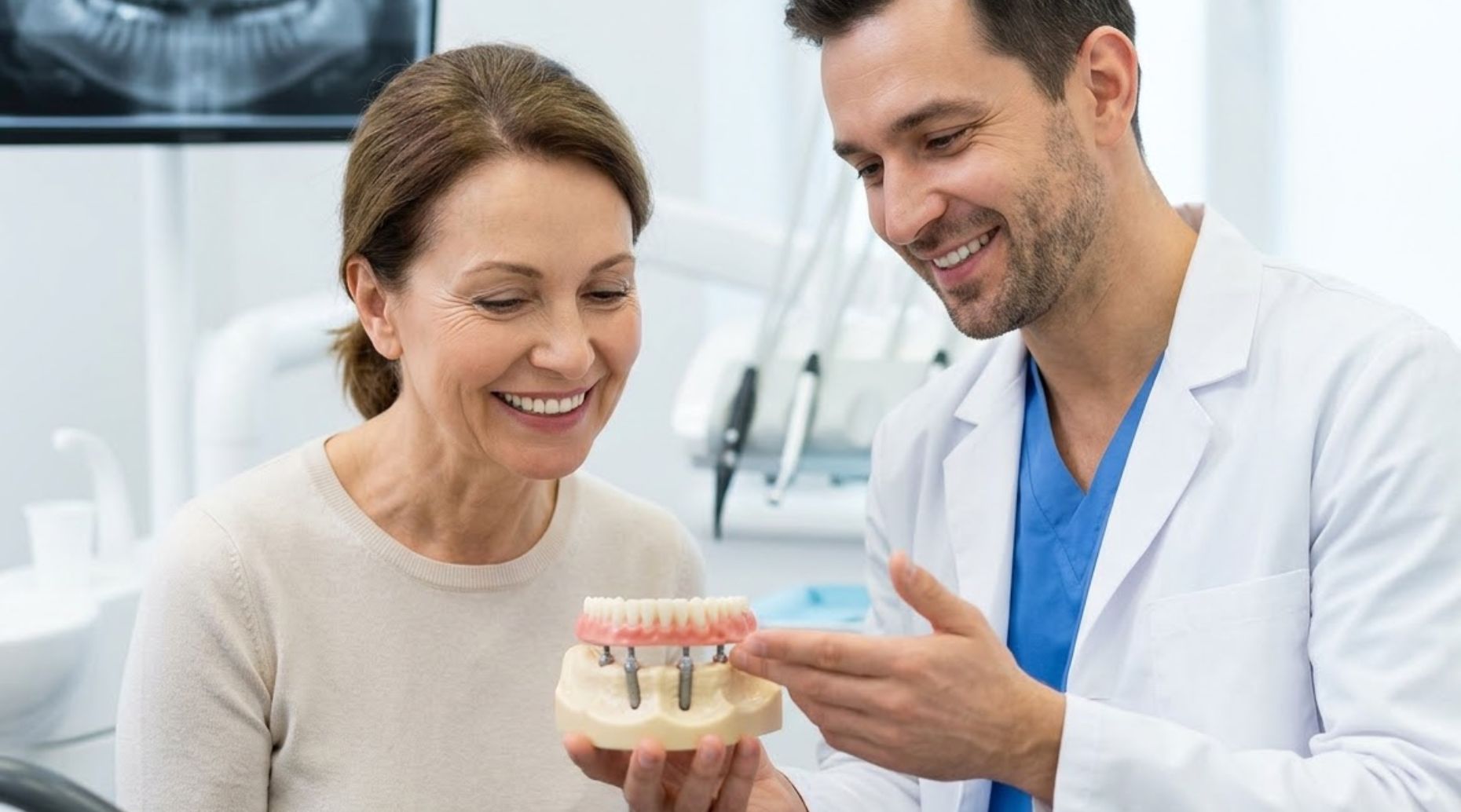
All-on-4 dental implants offer a predictable solution for patients with tooth loss, restoring function while protecting jawbone integrity and facial form. This article explains the mechanisms by which these restorations reduce bone resorption and prevent facial collapse over time. Tooth loss commonly leads to reduced bone density and altered facial contours; All-on-4 implants replicate root function, provide mechanical stimulation to the jaw, and help preserve facial support. We describe the causes of bone loss, the process of osseointegration, and the documented long-term benefits and clinical evidence for All-on-4 treatments.
What Causes Jawbone Loss and Facial Sagging Without Implants?
Jawbone loss and facial sagging commonly follow tooth loss because the bone no longer receives the functional load from tooth roots. Without this stimulation, a physiological process called resorption reduces bone volume and structural support. Concurrent periodontal disease accelerates the problem through inflammation and infection of supporting tissues. Age-related declines in bone density further compound these effects, producing the characteristic sunken appearance seen in advanced cases.
How Does Tooth Loss Lead to Jawbone Resorption?
Tooth loss triggers a sequence that results in jawbone resorption. The absence of tooth roots removes the occlusal and masticatory forces that maintain bone density. Normally, chewing loads stimulate bone remodeling and preservation; without them, the bone weakens and shrinks, losing volume and stability. Implant-supported restorations, including All-on-4, are engineered to substitute for root function and restore the mechanical stimulus necessary to preserve bone.
What Are the Effects of Bone Loss on Facial Appearance?
Loss of jawbone alters facial proportions and soft-tissue support, producing a hollowed or aged appearance. As bone volume diminishes, the cheeks and lips receive less structural backing, which can change facial alignment and expression. These visible changes often affect patients’ self-image and wellbeing. Restoring or preserving bone with implants helps maintain facial contours and improves aesthetic outcomes.
How Do All-on-4 Implants Stimulate Jawbone Preservation?
All-on-4 implants preserve the jawbone by replicating the functional load normally applied by tooth roots. Placed in specific locations within the jaw, the implants transfer occlusal forces to the bone during chewing. This mechanical stimulus encourages osseointegration—the biological fusion of bone to the implant surface—which stabilises the restoration and sustains bone density, thereby reducing further resorption and supporting facial structure.
What Is Osseointegration and Its Role in Bone Health?
Osseointegration is the physiological process by which bone cells attach to and grow around an implant, creating a firm, long-term connection. This biological bond is essential for implant stability and function. As the implant becomes incorporated into the bone, it restores the mechanical environment needed for healthy remodeling and helps prevent the resorptive changes that follow tooth loss.
How Do All-on-4 Implants Promote Jawbone Remodeling?
All-on-4 restorations provide rigid anchorage for a full-arch prosthesis, delivering controlled masticatory forces to surrounding bone. These forces stimulate bone turnover and adaptive remodeling, helping to maintain or increase bone density. Over time the bone adapts to the load environment created by the implants, improving the resilience and long-term stability of the restoration.
Further research examines the biomechanical performance of different framework materials and how they alter stress patterns within the jawbone.
All-on-4 Framework Materials & Jawbone Stress
Overall, the use of a PEEK framework demonstrated better stress distribution in the jawbone due to its elastic modulus, the maximum stress of which is 26% lower at most than Ti. Although PEEK frameworks showed lower stress overall, implant stress increased, particularly for cantilever lengths over 6 mm, reaching values up to 2.6 times higher than in titanium.
Biomechanical analysis of All-on-4 implant supported framework using different materials across various clinical practice, K Gai, 2025
What Are the Long-Term Benefits of Full Arch All-on-4 Implant Restorations?
Full-arch All-on-4 restorations deliver durable functional and aesthetic benefits that extend beyond immediate tooth replacement. Key long-term advantages are outlined below.
- Improved Oral Function: Patients regain effective chewing and clearer speech, improving nutrition and daily comfort.
- Enhanced Aesthetics: Restorations support facial soft tissues and help prevent the sunken appearance associated with tooth loss.
- Jawbone Health Maintenance: By re-establishing functional load, All-on-4 implants reduce ongoing resorption and support sustained bone health.
These outcomes make All-on-4 a comprehensive option for patients seeking lasting rehabilitation of both function and appearance.
Clinical studies reinforce these benefits and stress the role of optimised aftercare in maintaining bone levels and quality of life.
Long-Term All-on-4 Benefits & Bone Loss Prevention
Optimized aftercare including professional teeth cleaning (PTC) (at least twice a year) can minimize the anamnestic effect of smoking, diabetes mellitus, and osteoporosis on BOP and possible bone loss. Offering an implant-supported dental rehabilitation can improve the patients’ phonetic and masticatory function and therefore quality of life [1].
Long-term follow-up of full-arch immediate implant-supported restorations in edentulous jaws: a clinical study, 2020
How Do All-on-4 Implants Prevent Facial Sagging Over Time?
All-on-4 implants counter facial sagging by preserving bone volume and restoring the structural support for soft tissues. As implants integrate and transmit functional loads, they maintain the jaw’s shape and resist the contour changes that produce a collapsed facial appearance. This structural preservation contributes to improved facial aesthetics and overall oral health.
What Clinical Evidence Supports Implant Longevity and Bone Preservation?
Clinical research reports consistent success with All-on-4 protocols, documenting stable bone levels in many patients over long-term follow-up. The documented role of osseointegration in anchoring implants and preserving bone provides robust evidence for the durability of these restorations and their capacity to limit jawbone loss.
How Does All-on-4 Compare to Traditional Dentures in Bone and Facial Health?
Compared with conventional removable dentures, All-on-4 restorations maintain mechanical stimulation of the jawbone and therefore better protect bone volume and facial contours. Traditional dentures lack this fixed, load-bearing interface and are associated with progressive resorption and altered facial structure. For patients concerned about long-term skeletal and aesthetic outcomes, All-on-4 offers a more definitive approach.
Why Are All-on-4 Implants Superior for Jawbone Stimulation?
All-on-4 restorations use four strategically placed implants to provide a stable, load-bearing foundation while often reducing the need for bone grafting. This configuration delivers predictable transfer of occlusal forces to the jaw, supporting bone maintenance and improving prosthetic stability. The approach therefore reduces the risk of further bone loss compared with non‑implant options. For more information, visit Siouxland Oral & Maxillofacial Surgery.
What Are the Patient Experience Differences Between Implants and Dentures?
Patients commonly report greater comfort and confidence with implant-supported restorations than with removable dentures. Implants provide improved stability for eating and speaking, and many patients note enhanced appearance and reduced need for adjustments. By preserving bone and facial form, All-on-4 solutions contribute to a more satisfactory long-term outcome.
What Should Patients Expect During and After the All-on-4 Procedure?
Prospective patients can expect a detailed clinical assessment to confirm suitability for implants. The procedure typically involves surgical placement of implants under local anaesthesia, followed by a healing interval during which osseointegration occurs. Clinicians provide post-operative care instructions to support healing and implant maintenance. Patients usually experience marked improvement in function and appearance once healing is complete.
What Is the Surgical Process for Full Arch Restoration?
The surgical sequence for full-arch All-on-4 restoration comprises several defined stages:
- Consultation and Evaluation: A comprehensive assessment of oral health and bone anatomy informs the treatment plan.
- Implant Placement: Implants are placed into the jawbone under appropriate anaesthesia.
- Healing Period: A period of several weeks allows osseointegration to establish a stable foundation for the prosthesis.
This staged approach aims to deliver a functional, long-lasting, and aesthetically acceptable solution for edentulous patients.
How Can Patients Maintain Implant Health for Long-Term Bone Preservation?
Maintaining implant health is essential to protect bone and soft tissues. Recommended practices include:
- Good Oral Hygiene: Regular brushing and interdental cleaning reduce plaque and risk of peri-implant infection.
- Regular Dental Check-Ups: Routine professional reviews detect and manage issues early.
- Healthy Lifestyle Choices: A balanced diet and avoidance of tobacco support healing and implant longevity.
Adherence to these measures helps patients maximise the longevity of their All-on-4 restorations and sustain bone preservation.
What Do Patients Say About Their Facial and Bone Health After All-on-4 Implants?
Patient-reported outcomes frequently highlight improved comfort, restored facial contours, and increased confidence following All-on-4 treatment. Many patients describe better aesthetics and reduced concerns about further bone loss, which together improve quality of life. These consistent reports reinforce the clinical benefits observed in formal studies.
How Do Case Studies Demonstrate Successful Jawbone Preservation?
Case reports and series illustrate successful strategies for preserving jawbone with All-on-4 protocols. In some cases, adjunctive bone grafting is used to augment deficient sites. Immediate loading techniques have also shown effectiveness in maintaining bone levels while restoring function. These clinical examples support the role of All-on-4 restorations in achieving favourable anatomical and functional outcomes.
Frequently Asked Questions
What is the recovery time after the All-on-4 implant procedure?
Recovery varies by patient, but most can expect a healing period of approximately 3 to 6 months during which osseointegration takes place. Initial swelling and discomfort are common and are managed with prescribed analgesia. Scheduled follow-up visits allow your dental team to monitor healing and confirm implant integration.
Are All-on-4 implants suitable for everyone?
All-on-4 is appropriate for many patients with complete or near-complete tooth loss, but candidacy depends on overall health, bone quantity and quality, and specific oral conditions. A thorough clinical evaluation is necessary to determine suitability. Patients with extensive bone loss may need preparatory procedures such as grafting to optimise outcomes.
How do All-on-4 implants compare in cost to traditional dentures?
All-on-4 restorations generally involve higher initial costs than removable dentures because of surgery and implant materials. However, they often prove more cost-effective long term due to reduced need for repeated adjustments, replacements, and the benefits of preserved bone and improved function. Discuss financing and treatment planning with your provider to assess long‑term value.
What are the dietary restrictions after receiving All-on-4 implants?
Following implant surgery, patients are usually advised to follow a soft diet for the initial healing period of several weeks to minimise loading while osseointegration begins. Suitable foods include yogurt, smoothies, mashed potatoes and soups. As healing progresses and your clinician permits, you can gradually reintroduce firmer foods while maintaining careful oral hygiene.
Can All-on-4 implants fail, and what are the signs of failure?
Although success rates are high, failures can occur due to infection, inadequate bone support, or improper load management. Warning signs include persistent pain, swelling, or mobility of the implant. If these symptoms arise, contact your dental professional promptly for assessment; early intervention often prevents complete failure.
What maintenance is required for All-on-4 implants?
Maintenance mirrors principles used for natural dentition: brush twice daily, clean interdental areas and use an antiseptic mouthwash as advised. Regular professional reviews and hygiene visits are essential to monitor peri‑implant tissues. Lifestyle factors, particularly avoiding tobacco and maintaining nutrition, also support long-term success.
Conclusion
All-on-4 dental implants provide a reliable method to prevent jawbone loss and limit facial sagging while restoring oral function and appearance. By restoring root‑like load and promoting osseointegration, these restorations help maintain bone volume and facial contours, improving patients’ comfort and quality of life. For personalized guidance and to explore whether All-on-4 implants are right for you, book a consultation with Siouxland Oral & Maxillofacial Surgery today.