
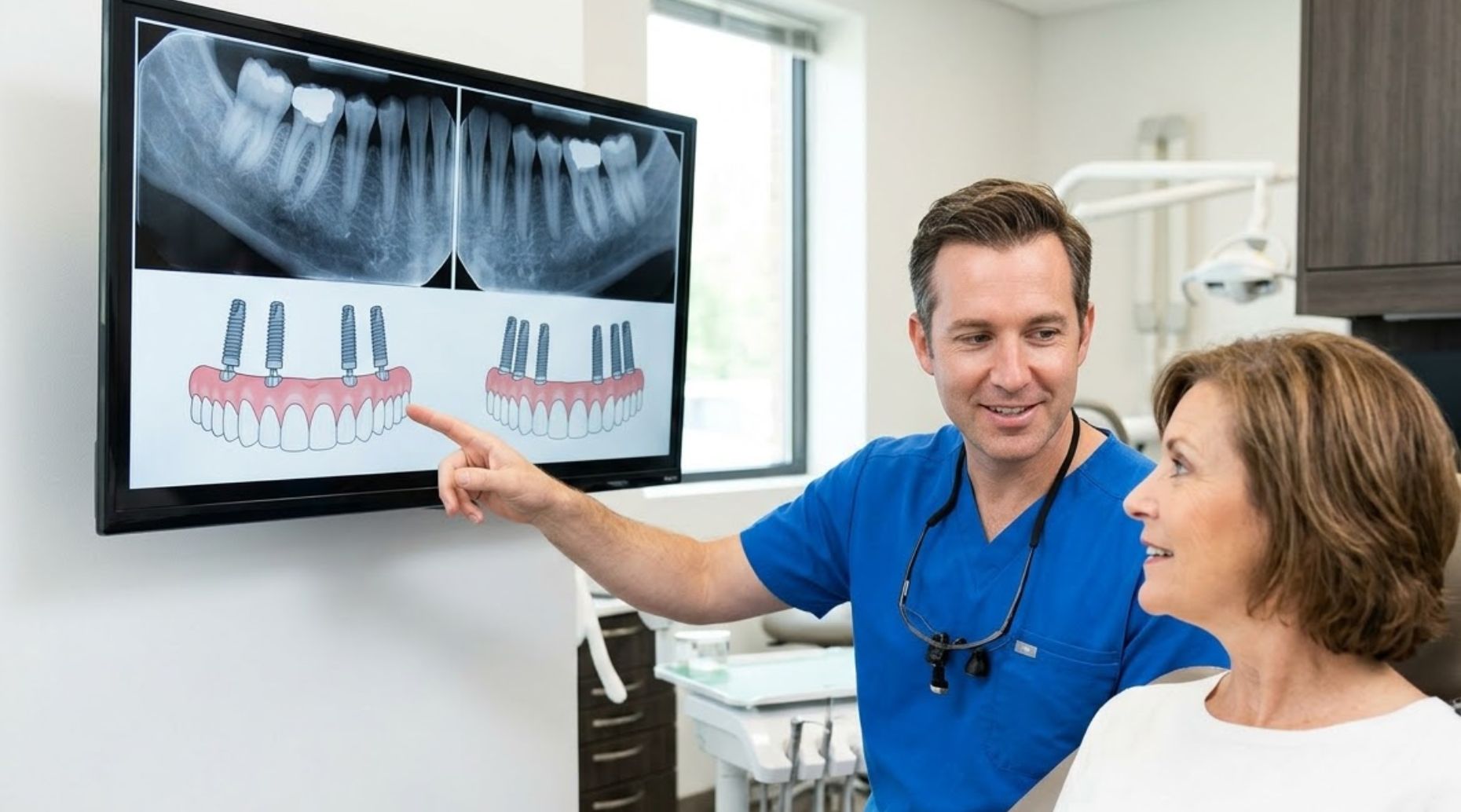
Dental implants have transformed restorative dentistry by providing predictable solutions for tooth loss. All on 4 dental implants and All-on-6 are two common full-arch approaches. This article compares their definitions, mechanics, clinical benefits, and candidacy considerations. Understanding these differences helps patients and clinicians select the safest, most effective restoration for each clinical situation.
What Are All-on-4 and All-on-6 Dental Implants?
All-on-4 and All-on-6 are full-arch implant protocols that use a limited number of implants to support a prosthetic arch. The All-on-4 method uses four strategically placed implants to anchor a complete denture. All-on-6 uses six implants to increase support and stability. Both aim to restore function and aesthetics, but the clinical indications and mechanical demands differ.
How Do All-on-4 Implants Function in Oral Surgery?
The All-on-4 technique employs angled implant placement and immediate prosthetic loading in many cases. This allows patients to receive provisional teeth on the day of surgery, reducing the traditional waiting period. Angled placement optimises available jawbone and often reduces the need for bone grafting. The result is an earlier return to function and an improved aesthetic outcome while preserving bone where possible.
What Distinguishes All-on-6 Implants in Dental Implantology?
All-on-6 uses six implants to create a broader support base for the prosthesis. The additional implants increase primary stability and can be advantageous for patients with reduced bone density or extensive tooth loss. In some clinical situations, this approach permits a graftless pathway. The extra support contributes to greater long-term durability of the restoration.
What Are the Key Benefits of All-on-4 Versus All-on-6 Dental Implants?
Comparing All-on-4 and All-on-6 highlights distinct advantages for each approach relevant to clinical goals and patient needs.
- Fewer Implants Required: All-on-4 requires only four implants, making it a less invasive option with a quicker surgical procedure.
- Cost-Effectiveness: Generally, All-on-4 may be more affordable due to the reduced number of implants and associated surgical costs.
- Quicker Recovery: Patients often experience a faster recovery time with All-on-4 implants, as the procedure is less extensive.
| Benefit | All-on-4 | All-on-6 |
|---|---|---|
| Number of Implants | 4 | 6 |
| Cost | Generally lower | Typically higher |
| Recovery Time | Quicker | May take longer |
These distinctions underscore the suitability of All-on-4 for patients seeking a less invasive, more cost-effective full-arch solution when clinically appropriate.
Which Advantages Does All-on-4 Offer for Suitable Candidates?
For eligible patients, All-on-4 reduces the likelihood of bone grafting through angled implant placement and provides immediate provisional function. Patients regain chewing ability and smile aesthetics quickly. The technique also helps support facial contours, contributing to improved appearance and patient confidence.
What Are the Clinical Benefits of All-on-6 Implants?
All-on-6 provides increased load distribution across the jaw, which can reduce mechanical stress on individual implants and lower the risk of failure. The added support improves comfort by reducing pressure points and enhances the long-term stability and durability of the restoration for patients with greater functional demands.
How Does Patient Candidacy Influence the Choice Between All-on-4 and All-on-6?
Candidacy determines the preferred approach. Key factors include bone volume, extent of tooth loss and overall medical status. Patients with adequate bone may be well suited to All-on-4; those with lower bone volume or more extensive loss may require the extra support of All-on-6. A comprehensive evaluation by an oral surgery specialist is essential to make the appropriate recommendation.
What Bone Density and Health Criteria Determine Implant Suitability?
Implant suitability depends on jawbone quality and the patient’s general health. Imaging studies help assess bone quantity and density. Medical conditions and medications that impair healing must be considered. If bone is insufficient, clinicians may recommend adjunctive procedures, such as bone grafting, to achieve a reliable outcome.
How Do Oral Surgery Experts Assess Eligibility for Each Implant Type?
Oral surgery teams perform a structured assessment that includes clinical examination of the gums and remaining dentition, radiographic imaging such as X-rays or CT scans, and a review of medical history. This process identifies anatomical and systemic factors that affect surgical planning and the likelihood of successful osseointegration.
What Are the Cost Differences Between All-on-4 and All-on-6 Dental Implants?
Cost differences can be substantial. All-on-4 typically incurs lower fees because it uses fewer implants and a less complex surgical protocol. All-on-6 may be more expensive due to additional implants and operative time. Patients should discuss budget, expected outcomes and financing with their oral surgery provider to identify the best option for their case.
How Does Implant Number Affect Overall Treatment Expenses?
Implant count directly influences treatment cost. Fewer implants often mean lower surgical fees and less chair time. More implants increase material and surgical expenses but may offer greater long-term stability. Patients should balance upfront cost against functional longevity when deciding.
What Payment Options Does Siouxland Oral Surgery Provide for Full Arch Restorations?
Siouxland Oral & Maxillofacial Surgery provides financing options to help manage full-arch restoration costs. Accepted payment methods vary and may include credit card, cash and insurance depending on coverage. Patients are encouraged to consult the office for personalised financial guidance.
What Should Patients Expect During Recovery and Maintenance for All-on-4 and All-on-6 Implants?
Recovery follows a staged process. Initial soft-tissue healing usually occurs within days, while complete integration of the implants into the jawbone takes longer. Patients must follow post-operative instructions, maintain meticulous oral hygiene and attend scheduled follow-up visits to monitor healing and preserve the restoration.
What Is the Typical Recovery Timeline After Implant Surgery?
Recovery timelines vary, but many patients experience initial healing within 1–2 weeks. Clinicians schedule follow-ups during this period to assess progress. Full osseointegration commonly occurs over 3–6 months, after which definitive prosthetic work is completed if not done earlier.
How Can Patients Ensure Longevity and Stability of Their Dental Implants?
Patients should maintain excellent oral hygiene, including regular brushing and interdental cleaning, and avoid very hard foods during early healing. Routine dental examinations and professional maintenance are essential to protect implant health and maximise the lifespan of an All-on-4 or All-on-6 restoration.
Frequently Asked Questions
What factors should I consider when choosing between All-on-4 and All-on-6 implants?
Consider bone density, the extent of tooth loss and your overall health. All-on-4 suits patients with adequate bone, while All-on-6 can provide needed support for lower bone volume. A consultation with an oral surgery specialist will clarify which option best meets your clinical needs and goals.
Are there any dietary restrictions after receiving All-on-4 or All-on-6 implants?
After surgery, clinicians usually recommend a soft-food diet during initial healing to minimise discomfort and protect the implants. Patients may progress to firmer foods as healing advances, but should avoid excessively hard or sticky items until the surgeon confirms it is safe.
How long do All-on-4 and All-on-6 implants last?
These full-arch solutions are intended to be long-lasting. Many patients experience benefits for 10 years or more when they adhere to proper oral hygiene, attend regular maintenance visits and address risk factors that affect implant health.
What is the role of follow-up appointments after implant surgery?
Follow-up visits allow the surgical team to monitor healing, evaluate osseointegration and manage any concerns early. During these appointments your oral surgeon will review care instructions and adjust the treatment plan as needed to support a successful outcome.
Can I get dental insurance coverage for All-on-4 or All-on-6 implants?
Coverage varies by insurer and policy. Some plans may cover portions of implant treatment while others do not. Verify benefits with your insurance provider and discuss financing alternatives with your oral surgery office to plan for any out-of-pocket costs.
What are the potential risks or complications associated with dental implants?
Although implants are widely successful, potential complications include infection, implant failure, nerve injury and sinus involvement. Careful surgical technique and adherence to post-operative instructions reduce these risks. Discuss specific concerns with your oral surgeon to understand how they apply to your case.
Conclusion
Choosing between All-on-4 and All-on-6 implants affects function, comfort, and long-term oral health. All-on-4 can offer cost and recovery advantages for suitable candidates, while All-on-6 provides extra stability and durability for higher-support needs. To determine the best full-arch restoration for your needs, book a consultation with Siouxland Oral & Maxillofacial Surgery and review your clinical options with our specialists.