
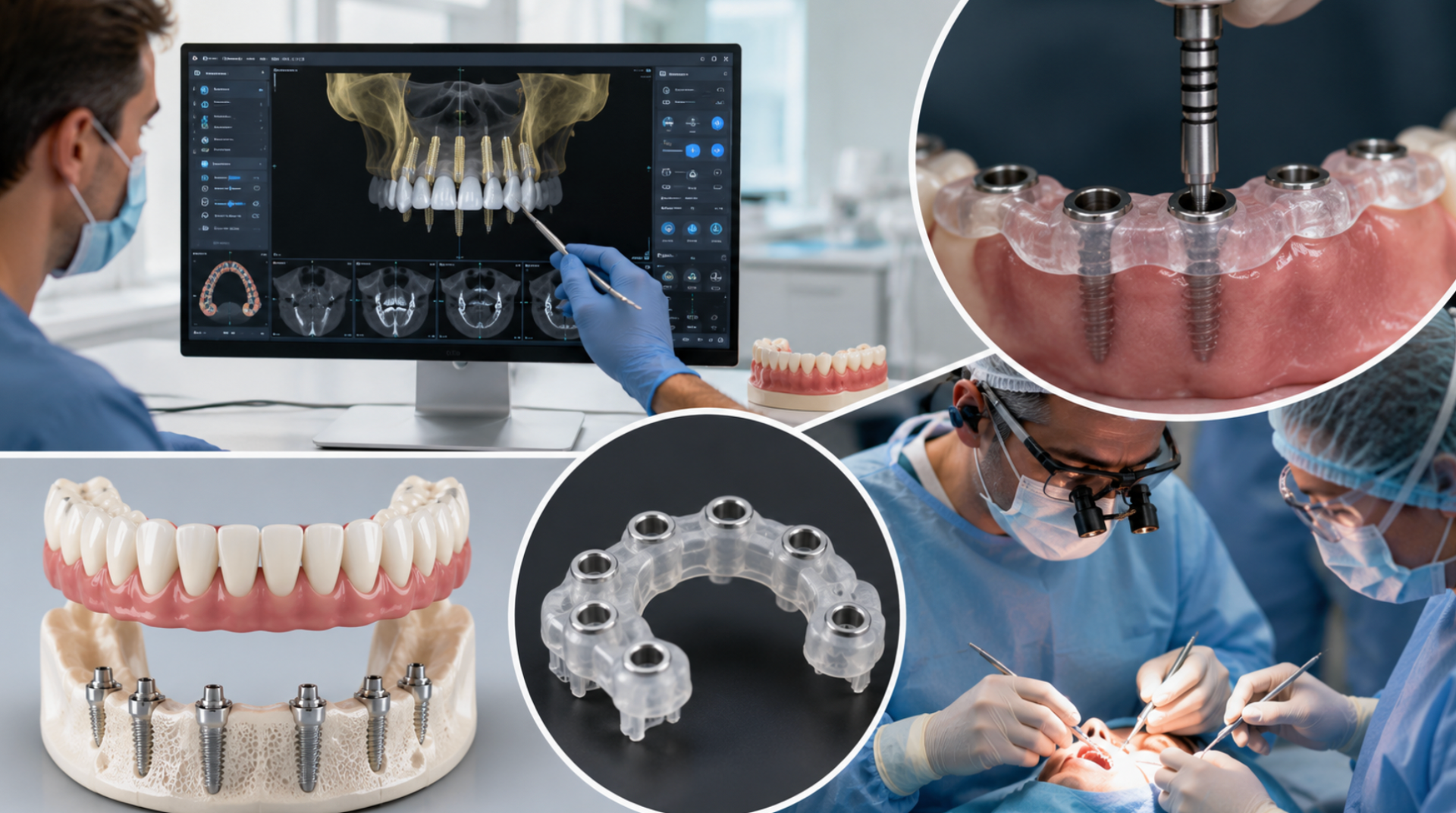
Full-arch restoration returns an entire dental arch using advanced surgical methods combined with digital technologies. This article explains guided dental implant surgery and the role of preoperative digital planning and precision protocols that improve surgical results. Many patients seek efficient, durable solutions for tooth loss; understanding these technologies helps optimise treatment and patient experience. We review guided surgery, 3D dental imaging and digital smile design to show how these innovations are advancing restorative dentistry and improving clinical outcomes.
What Is Guided Dental Implant Surgery and How Does It Enhance Full-Arch Restoration?
Guided dental implant surgery is a precision technique that uses detailed imaging and preoperative digital planning to define implant position and angulation. By following a predetermined surgical plan, clinicians place implants with greater accuracy and reproducibility. This approach reduces surgical complications, enhances patient safety and improves predictability when integrated with full‑arch restoration protocols.
Benefits for Precision Outcomes
The integration of guided surgery in full-arch restoration procedures leads to multiple benefits:
- Increased Accuracy: The precision of implant placement improves the overall fit and stability of the prosthetic.
- Reduced Recovery Time: With less invasive procedures, patients often experience quicker healing and reduced post-operative discomfort.
- Enhanced Aesthetics: Improved placement techniques contribute to a more natural appearance of the final restoration.
The following comparison highlights how guided surgery supports superior clinical outcomes relative to other techniques.
| Technique | Accuracy | Recovery Time | Aesthetic Quality |
| Guided Surgery | High | Short | Excellent |
| Conventional Surgery | Moderate | Moderate | Good |
| Flapless Surgery | Moderate | Short | Variable |
The comparison demonstrates how guided surgery improves clinical outcomes through enhanced planning and execution.
How Does Computer-Guided Implant Placement Improve Surgical Accuracy and Safety?
Computer-guided implant placement uses patient‑specific 3D models from imaging to map optimal implant sites before surgery. During the procedure, the digital plan directs the surgeon to place implants as intended, reducing the likelihood of human error and improving surgical efficiency. Oral surgery specialists continue to apply these methods in advanced clinical care and treatment planning for suitable patients.
What Are the Steps Involved in Guided Implant Surgery?
The steps involved in guided implant surgery follow a defined workflow designed to maximise both precision and safety:
- Consultation and Imaging: Initial patient assessments include detailed imaging using Cone Beam Computed Tomography (CBCT), which provides comprehensive 3D views of the jawbone and surrounding structures.
- Surgical Planning: Using software, the dental team devises a specific treatment plan and creates a surgical guide tailored to the patient’s anatomy.
- Implant Placement: Guided by the surgical template, implants are placed precisely in the ideal locations for enhanced stability and alignment.
This workflow delivers an effective, minimally invasive dental solution tailored to the patient.
How Does 3D Dental Imaging Technology Support Precise Implant Placement?
3D dental imaging provides detailed visualisation of osseous and soft‑tissue anatomy, enabling clinicians to identify critical landmarks and plan implant positions that avoid complications. Precise imaging also facilitates interdisciplinary collaboration, producing cohesive treatment plans and predictable surgical execution. Patients can consult comprehensive resources to better understand these advanced procedures.
What Is Cone Beam Computed Tomography and Its Role in Digital Implant Planning?
Cone Beam Computed Tomography (CBCT) produces high‑resolution 3D images of dental anatomy, offering comprehensive views of bone volume and spatial relationships beyond conventional radiographs. CBCT is central to digital implant planning, informing detailed anatomical assessments and the design of patient‑specific surgical guides that support precise implant placement.
How Does 3D Imaging Reduce Surgical Time and Post-Operative Complications?
Employing 3D imaging reduces operative time and postoperative complications by enabling thorough preoperative planning. Accurate implant positioning lowers the risk of infection and the need for revision procedures, improving patient safety and satisfaction. These efficiencies streamline the surgical process and support better long‑term outcomes.
What Is the Digital Smile Design Process in Full-Arch Restoration?
Digital Smile Design (DSD) is a systematic method for creating a personalised restorative plan that uses advanced imaging and design software to preview the planned outcome. In full‑arch restoration, DSD enables tailored treatment that aligns aesthetic goals with functional requirements through a staged process:
- Initial Consultation: Gathering patient preferences and expectations.
- Simulation: Using digital tools to create a virtual preview of the smile.
- Finalization: Adjusting the design based on the patient’s feedback before proceeding to restoration.
DSD aligns functional and aesthetic objectives during planning, improving final outcomes and patient satisfaction.
How Does Digital Workflow Customize Implant-Supported Prostheses?
Digital workflows integrate imaging, design software and manufacturing to produce custom implant‑supported prostheses that match the patient’s anatomy. This approach improves prosthesis function, comfort and aesthetics while enabling efficient collaboration among specialists throughout the treatment process.
What Are the Key Advantages of Using Digital Smile Design Over Traditional Methods?
Digital Smile Design offers multiple advantages compared to traditional approaches in creating dental restorations:
- Greater Precision: The accuracy of digital tools surpasses manual techniques, leading to improved outcomes.
- Patient Involvement: Enhanced visualization tools foster greater patient engagement in the treatment process, resulting in more satisfactory outcomes.
- Rapid Prototyping: Changes can be accommodated swiftly, enabling prompt adjustments based on patient feedback or clinical findings.
These benefits position DSD as a clear advancement over conventional methods. Patients may discuss payment and financing options for such procedures through the clinic when considering treatment.
What Are the Documented Patient Outcomes and Case Studies Demonstrating Precision Surgery Benefits?
Numerous studies and case reports document improved outcomes with guided surgical techniques. Case series show higher implant success and patient satisfaction due to reduced discomfort and enhanced aesthetic results. These documented results support clinicians in adopting advanced methods to better meet patient expectations.
How Have Guided Implant Surgery and Digital Planning Improved Success Rates?
The adoption of guided implant surgery and digital planning has measurably increased implant success. Published analyses report success rates exceeding 98% in appropriately selected cases when these technologies and protocols are applied, reflecting more accurate placement and refined postoperative care that support durable outcomes.
What Do Patients Say About Their Comfort and Recovery Experiences?
Patient feedback consistently emphasises comfort and faster recovery after guided procedures. Many describe reduced postoperative pain and a smoother healing course compared with conventional methods. Case studies and patient testimonials reflect this positive shift and indicate increased confidence in the surgical process.
How Are Surgical Guides Fabricated and Used to Enhance Full-Arch Restoration Accuracy?
Surgical guides are fabricated from digital treatment plans and imaging to conform to the patient’s oral anatomy. The guide controls implant trajectory and position, reducing intraoperative variability and supporting consistent, predictable outcomes for full‑arch restoration.
What Advances in Surgical Guide Production Support Precise Implant Placement?
Recent advances, notably 3D printing, permit precise fabrication of custom surgical guides that account for fine anatomical detail. These guides improve both accuracy and efficiency in implant placement and represent a leading practice in modern implant dentistry.
How Do Surgical Guides Integrate Imaging and Digital Planning Technologies?
Surgical guides integrate Cone Beam CT imaging and digital planning to create precise operative templates. These templates guide instruments during implant placement, streamlining workflow and supporting scientifically optimised procedures. For access to these advanced techniques, consult a practice that offers comprehensive oral surgery and implant services.
Frequently Asked Questions
What are the potential risks associated with guided dental implant surgery?
Although guided implant surgery reduces many risks, complications such as infection, nerve injury or implant malposition can still occur, albeit infrequently. A thorough medical history and preoperative imaging help mitigate these risks. Meticulous planning and strict adherence to postoperative care reduce complication rates and support a smoother recovery.
How long does a full-arch restoration typically take?
Treatment timelines vary by case complexity and the specific technologies used. Initial consultations and imaging often complete within a week; the surgical procedure typically lasts several hours. Healing requires several weeks, with final restorative results commonly achieved within three to six months. Guided protocols can shorten certain phases of treatment.
Can anyone be a candidate for guided dental implant surgery?
Many patients qualify for guided implant surgery, but candidacy depends on factors such as bone volume and systemic health. CBCT imaging assesses bone sufficiency. Conditions like uncontrolled diabetes or select autoimmune disorders may affect eligibility. A comprehensive clinical evaluation determines the safest and most appropriate plan.
What is the cost difference between guided and conventional dental implant surgery?
Guided implant surgery often involves higher upfront costs due to advanced imaging and planning, yet improved accuracy can reduce the need for revisions and associated long‑term expenses. Prices vary by location, case complexity and clinic policy. Patients should discuss financing and insurance options with their provider.
How should patients prepare for guided dental implant surgery?
Preparation includes following preoperative instructions, which may require withholding blood thinners when safe to do so and observing dietary restrictions. Provide an accurate medical history and current medication list to the dental team. Understanding the procedure and expected recovery helps reduce anxiety on the day of surgery.
What aftercare is recommended following full-arch restoration?
Postoperative care is essential for successful implant integration. Follow prescribed medications for pain and inflammation, avoid hard foods, and maintain excellent oral hygiene. Attend scheduled follow-ups to monitor healing and report unexpected pain, swelling or other concerns promptly.
Can guided dental implant surgery be reversed if complications arise?
If complications occur, implants can often be removed, though explantation may be complex. Clinicians will assess the situation and may recommend removal to prevent further issues. Timing and subsequent treatment depend on the clinical context; maintain open communication with your care team to plan remediation.
Conclusion
Guided dental implant surgery combined with advanced digital planning improves accuracy, aesthetics and recovery, producing safer procedures and higher patient satisfaction. Consult a dental specialist to discuss personalised treatment options. Speak with our expert clinical team to learn how precision techniques can restore function and confidence with compassionate, evidence‑based care.