
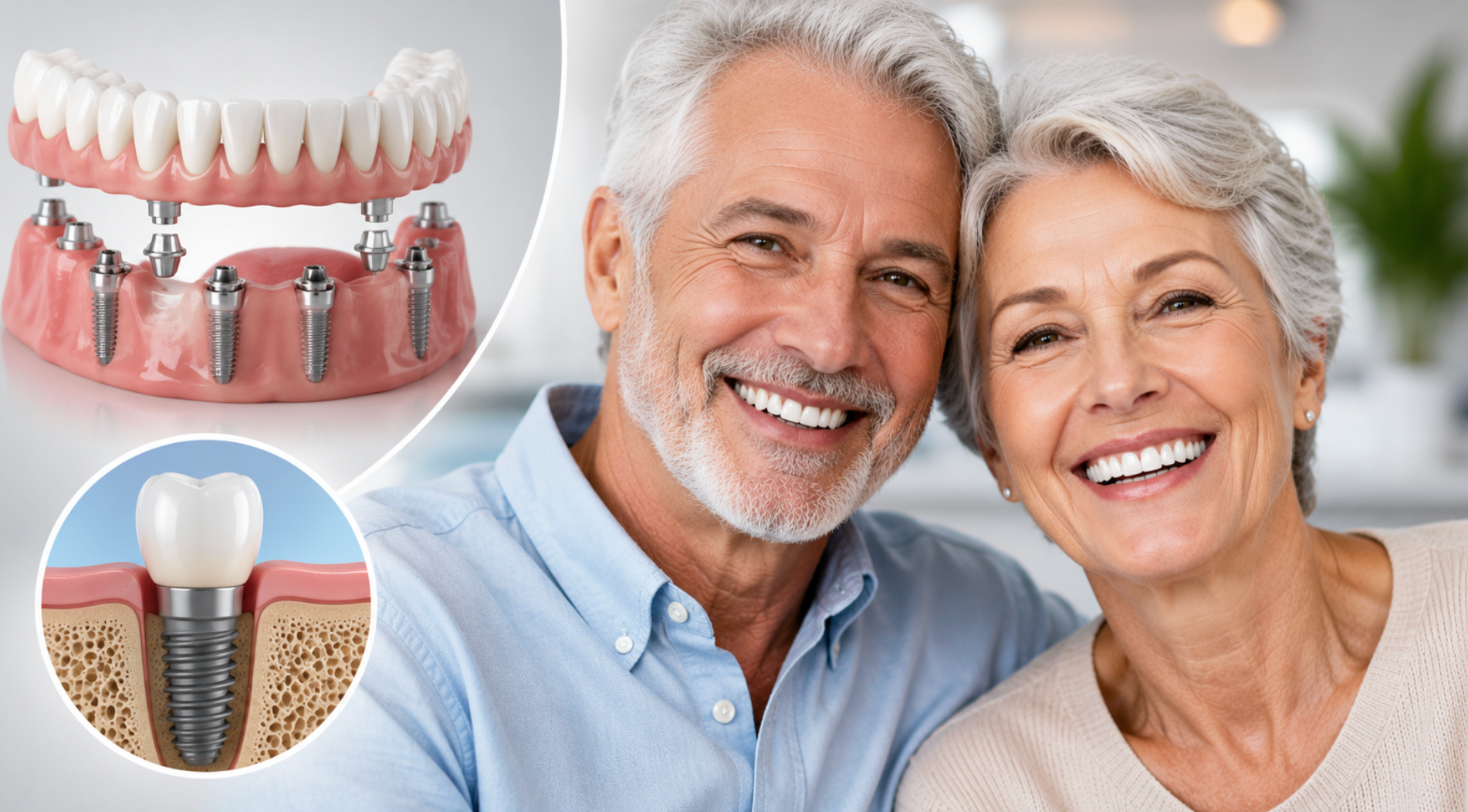
Full-arch dental implant restoration is a clinically established option for patients with extensive tooth loss. This procedure restores oral function and supports long-term oral health while improving quality of life. The following overview describes how full-arch restoration can recover masticatory efficiency, prevent progressive jawbone resorption, and rebuild a patient’s confidence. Practical information on expected recovery and post-operative care is also provided so prospective patients know what to expect.
Enhancements to Oral Health
Full-arch restoration improves oral health by addressing several interrelated issues: it restores effective chewing, supports the jawbone, and facilitates routine oral hygiene. Together these effects improve dental function and reduce the risk of subsequent oral disease.
For example, implant-supported prostheses stabilise the dentition and re-establish proper occlusion, enabling patients to tolerate a broader diet. Restored chewing efficiency directly supports nutritional intake and overall systemic well-being.
| Restorative Aspect | Benefit | Value |
| Chewing Efficiency | Restores ability to eat a variety of foods | Enhances nutrition |
| Jawbone Preservation | Prevents bone loss over time | Maintains facial structure |
| Oral Hygiene Improvement | Simplifies care routines | Reduces risk of dental issues |
Consequently, Siouxland Oral Surgery offers tailored full-arch solutions designed to support optimal oral health and long-term function for eligible patients.
How Does Full-Arch Restoration Improve Chewing Efficiency and Mastication?
Full-arch restorations provide a rigid foundation for prosthetic teeth, restoring mastication that closely approximates natural dentition. Unlike conventional removable dentures, implant-retained prostheses resist displacement during function, giving patients predictable bite control and greater confidence when eating.
In What Ways Does Implant Surgery Support Jawbone Preservation and Stability?
The implants used in full-arch restorations are typically titanium fixtures that integrate with the alveolar bone through osseointegration. That biological integration maintains mechanical loading of the jaw, which slows or prevents the bone resorption commonly seen after tooth loss. Preserving the underlying bone supports facial form and contributes to long-term prosthetic stability.
For patients seeking additional information or considering implant surgery, consult the expert resources available to review procedure details and candidacy criteria.
Improvements in Daily Living
The practical benefits of full-arch implant restorations translate into daily improvements in comfort, prosthetic stability, and social confidence. Many patients report a marked difference in routine activities following treatment.
A secure full-arch prosthesis enables clearer speech, more confident eating, and relaxed social interaction without concern for denture displacement. That reliability often enhances both personal and professional interactions.
Psychological Benefits
Restoring dental function and appearance has demonstrable psychological benefits. Patients commonly describe improved self-esteem and reduced anxiety in social situations after receiving full-arch implants, reflecting the procedure’s impact beyond oral mechanics.
Individuals who previously avoided smiling or social dining often report greater engagement and a higher quality of life once function and aesthetics are restored.
What Psychological Benefits Result from Restored Dental Aesthetics?
Full-arch implants produce a natural-looking restoration that improves facial aesthetics and enhances smile confidence. Improved appearance often correlates with better mental well-being and increased social participation.
Observing a restored smile can reinforce self-acceptance and motivate healthier habits, supporting a sustained return to normal social and professional activities.
Overall Quality of Life
The combined physical and psychological effects of full-arch restoration yield meaningful gains in quality of life. Patients typically note improvements in eating, speaking, and emotional well-being after treatment.
Together, restored function and renewed confidence create a holistic benefit. Clinical evidence and patient feedback indicate higher satisfaction when essential oral functions are reliably restored.
Key Benefits of Full-Arch Dental Implant Restoration for Oral Health
To summarise, the key benefits of full-arch dental implant restoration include:
- Improved Functionality : Enables effective chewing and consuming a variety of foods.
- Enhanced Aesthetics : Provides a natural-looking smile that boosts self-esteem.
- Bone Health Maintenance : Stimulates the jawbone, preventing deterioration associated with tooth loss.
These advantages demonstrate that full-arch restoration is both a functional dental treatment and a measure that can improve overall well-being.
What Is the Typical Recovery Process After Full-Arch Implant Surgery?
Managing the financial aspects of comprehensive implant care is an important element of treatment planning. For patients planning payment, reviewing available options helps ensure a clear, organised process. Making a payment through the practice’s channels facilitates timely scheduling and continuity of care.
How Long Is the Recovery Time and What Should Patients Expect?
Typical recovery from full-arch implant surgery covers an 8 to 12-week healing period, although many patients resume everyday activities within days of the procedure. Individual healing varies; strict adherence to post-operative instructions is essential to achieve predictable outcomes.
How Do Long-Term Maintenance and Cost Considerations Affect Full-Arch Restoration Outcomes?
Long-term success depends on appropriate maintenance: routine dental examinations, meticulous oral hygiene, and sensible dietary choices all support implant longevity. Investing in high-quality care and follow-up reduces the risk of complications and preserves function over time.
What Are the Ongoing Care Recommendations for Implant Longevity?
For maintaining the overall health of dental implants, consider the following recommendations:
- Daily Oral Hygiene : Brush and floss regularly to keep the implant area clean.
- Regular Check-Ups : Schedule biannual visits to your dentist for professional cleanings and evaluations.
- Avoid Hard Foods : Be cautious about consuming very hard items that could damage the implants.
Adhering to these recommendations supports implant function and helps patients maintain the benefits of their restoration over the long term.
How Does the Cost of Full Arch Dental Implants Compare and What Influences It?
Full-arch implant costs vary by case complexity, materials selected, and the surgical requirements. Key cost drivers include the number of implants, prosthetic design, and the provider’s level of experience. Discussing estimates with Siouxland Oral Surgery will clarify the expected investment and available financial arrangements.
What Are the Latest Clinical Success Rates and Innovations in Full-Arch Implant Procedures?
Advances in implant materials and surgical protocols have improved clinical outcomes for full-arch restorations. Contemporary techniques and careful case selection increase predictability. Procedures such as tooth extraction are commonly required to prepare a stable foundation for implants.
What Do Recent Studies Reveal About Implant Success Rates and Functional Improvements?
Current studies report that full-arch restorations achieve success rates exceeding 95% in the first several years after implantation. These data reflect improved materials, refined surgical technique, and adherence to post-operative care protocols.
Frequently Asked Questions
1. What are the differences between full-arch implants and traditional dentures?
Full-arch implants deliver greater stability and retention than traditional removable dentures. Removable dentures can shift during function, causing discomfort and speech or dietary limitations, whereas implant-retained prostheses anchor to the jaw and provide more natural function. Implants also maintain bone stimulation, which removable dentures do not provide.
2. How does the process of osseointegration work?
Osseointegration describes the biological fusion of the implant surface with surrounding bone. Titanium implants are biocompatible and encourage bone growth at the interface, creating a stable base for the prosthesis. Successful osseointegration is essential for long-term support and function.
3. Are there specific dietary restrictions after receiving full-arch implants?
Yes. During the initial healing phase patients should avoid hard, crunchy, or sticky foods to protect surgical sites and newly placed implants. Soft, nutrient-dense foods are recommended until healing and osseointegration progress; most patients can gradually return to normal eating habits with caution for exceptionally hard items.
4. How do full-arch restorations affect nutrition and eating habits?
Full-arch restorations expand dietary options by restoring reliable chewing function, which supports better food choices and improved nutrient intake. Enhanced mastication aids digestion and contributes to overall health.
5. What is the long-term success rate of full-arch dental implants?
Recent studies show that full-arch dental implants have an impressive success rate of over 95% within the first few years following implantation. Factors that support these outcomes include modern materials, precise surgical technique, and diligent postoperative maintenance.
6. How often should patients schedule follow-up appointments after implant surgery?
After the initial healing period, patients are typically advised to attend follow-up visits twice a year for routine examinations and professional hygiene. Regular monitoring allows early detection of issues and supports long-term implant health.
7. Can dental implants be placed immediately after tooth extraction?
In selected cases, implants may be placed immediately after extraction—a protocol known as immediate implant placement. This approach can shorten treatment time, but candidacy depends on bone quality, absence of infection, and other clinical factors assessed by the treating clinician.
Conclusion
Full-arch dental implant restoration provides substantive benefits to oral health and overall quality of life by restoring function, supporting jawbone integrity, and improving appearance. Patients considering this option are encouraged to consult with the experienced team at Siouxland Oral Surgery to review personalised treatment plans and expected outcomes. Begin the process toward improved oral function and renewed confidence with a specialist evaluation.