
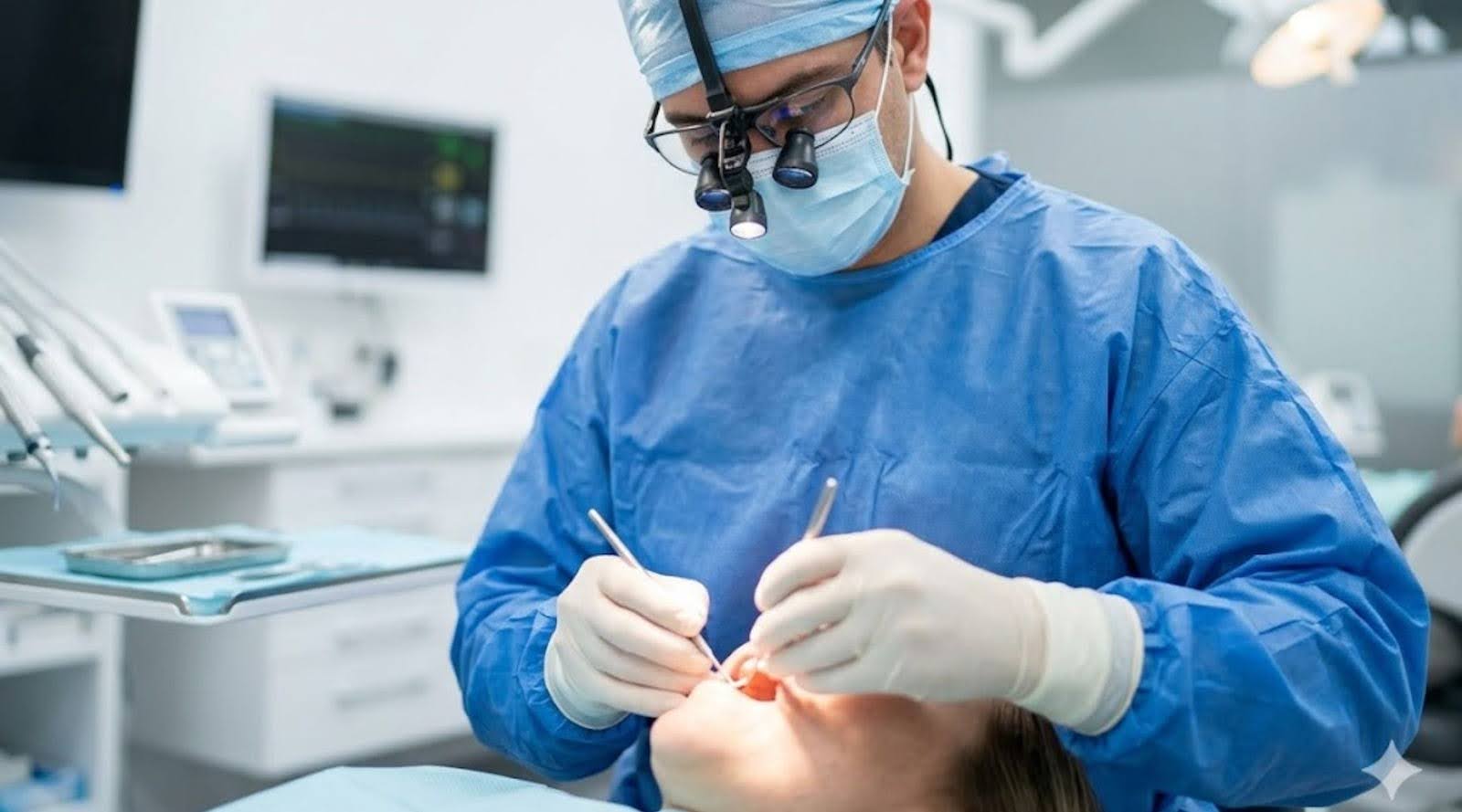
Board certification in oral surgery demonstrates a surgeon’s advanced training and dedication to patient safety. It indicates successful completion of rigorous education and assessment by the American Board of Oral and Maxillofacial Surgery. For patients, certification is a clear marker of clinical competence and a commitment to high-quality care. In Sioux Falls, recognising this credential can influence surgical outcomes and the overall patient experience. This article defines board certification, explains how it verifies surgical expertise, contrasts board-certified oral surgeons with general dentists, and summarises the qualifications of Dr. Denis Miller, a board-certified oral surgeon serving the community.
What Is Board Certification in Oral Surgery and Why Is It Essential?
Board certification in oral surgery is formal recognition that a surgeon has completed extensive specialty training and passed comprehensive examinations. The credential confirms the surgeon’s ability to perform complex procedures safely and effectively. Patients gain assurance knowing their provider has met the thorough standards established by the American Board of Oral and Maxillofacial Surgery.
The central aim of this credentialing is to reassure patients that their care will be safe, effective, and delivered to accepted professional standards.
Credentialing for Patient Safety in Surgical Specialties
A goal of the credentialing process is to ensure that patients can be treated safely and effectively, providing confidence in surgical care.
Association of Surgeons in Training, 2016
For those seeking oral surgery in Sioux Falls , consulting a board-certified oral surgeon such as Dr. Denis Miller offers reassurance. His certification reflects verifiable expertise and an ongoing commitment to patient safety and high-quality surgical care.
How Board Certification Guarantees Surgical Expertise and Patient Safety
Board certification requires completion of a residency—typically four to six years—during which surgeons gain hands-on experience in operative techniques, anaesthesia, and perioperative patient care. The certification pathway also includes demanding written and oral examinations that assess clinical knowledge and surgical judgement in oral and maxillofacial surgery.
These evaluations are structured to confirm a surgeon’s competence in managing routine and complex surgical scenarios.
Board Certification Process: Evaluating Surgical Competence
The final step in the board certification process for new surgeons involves the evaluation of common surgical problems. Results support the uptake of public SOEs in general surgery.
The effectiveness of public simulated oral examinations in preparation for the American Board of Surgery Certifying Examination: a systematic review, P McCulloch, 2015
Maintaining board certification also requires continuing education. Certified surgeons complete ongoing courses to stay current with advances in surgical techniques, patient safety protocols, and evidence-based practice. This lifelong learning ensures patients receive care that reflects the latest professional standards.
How Does a Board Certified Oral Surgeon Differ from a General Dentist?
The distinction lies in depth of surgical training and scope of practice. General dentists provide routine dental care, while board-certified oral surgeons complete additional specialised training focused on operative procedures, complex extractions, implant placement, and corrective jaw surgery. This advanced training prepares surgeons to manage operative risks and complications.
Patients requiring surgical intervention should review their provider’s qualifications. Board-certified oral surgeons have completed extended surgical training and assessment, which better positions them to handle intraoperative challenges and deliver comprehensive surgical care.
Comparing Oral Surgeon Qualifications and Training in Sioux Falls
Oral surgeons in Sioux Falls follow a rigorous pathway: a dental degree followed by a residency in oral and maxillofacial surgery. This education covers a broad range of surgical procedures, anaesthesia management, and patient care strategies. These qualifications reflect a professional commitment to excellence in clinical outcomes.
- Educational Background: Oral surgeons typically hold a Doctor of Dental Surgery (DDS) or Doctor of Medicine in Dentistry (DMD) degree, followed by specialized training in oral surgery.
- Residency Training: The residency program includes extensive clinical experience in surgical techniques, anesthesia, and patient care.
- Certification Processes: Board certification requires passing comprehensive examinations and demonstrating ongoing education in the field.
Understanding the Impact of Specialist Care on Oral Surgery Outcomes
Specialist care materially affects surgical outcomes. Board-certified oral surgeons provide tailored treatment plans that address each patient’s anatomy, health status, and recovery goals. Their focused training enables them to anticipate and manage complications, supporting safer procedures and predictable results.
Patients treated by specialists often experience shorter recovery periods and fewer complications. The specialist’s expertise contributes directly to improved functional and aesthetic outcomes.
Multiple studies report an association between board certification and better patient outcomes, including reduced surgical complication rates.
Board Certification & Patient Outcomes: Reducing Surgical Complications
between board certification and direct patient outcomes and surgical complications as an outcome. The study has focused on board certification and not recertification.
Association between board certification, maintenance of certification, and surgical complications in the
United States, T Xu, 2019
Meet Dr. Denis Miller: Sioux Falls’ Trusted Board Certified Oral Surgeon
Dr. Denis Miller is a board-certified oral and maxillofacial surgeon in Sioux Falls with a strong record of clinical experience and patient-centred care. His training and practical experience equip him to perform a wide range of oral surgical procedures with a focus on safety and reliable outcomes.
Dr. Miller’s board certification demonstrates his adherence to high professional standards. He emphasises personalised treatment plans and clear patient education so individuals understand their options and feel confident throughout the surgical process.
Credentials and Experience of Dr. Denis Miller
Dr. Miller holds a DDS degree and completed a residency in oral and maxillofacial surgery. His clinical practice includes routine extractions, implant surgery, and complex reconstructive procedures. He also participates in community outreach and patient education, reinforcing his commitment to local oral health.
Patient Success Stories and Testimonials Reflecting Quality Care
Patients of Dr. Miller commonly report clear explanations, compassionate care, and successful surgical results. Testimonials highlight the surgeon’s communication and the positive recovery experiences that followed their procedures, underscoring the value of board-certified specialist care.
What Oral Surgery Procedures Are Enhanced by Board Certified Expertise?
Board-certified oral surgeons perform complex procedures that require specialised surgical training. Common examples include dental implant placement, surgical removal of impacted wisdom teeth, and corrective jaw surgery. Each procedure benefits from the surgeon’s focused expertise and operative experience.
- Dental Implants: Board-certified surgeons have the skills necessary to place dental implants with precision, ensuring optimal integration with the jawbone.
- Wisdom Teeth Removal: Surgical removal of wisdom teeth is a common procedure that benefits from the expertise of a board-certified oral surgeon, minimizing complications.
- Jaw Surgery: Corrective jaw surgery requires advanced surgical techniques that are best performed by specialists trained in oral and maxillofacial surgery.
The advanced training and clinical experience of board-certified oral surgeons support higher patient satisfaction and better functional outcomes.
Common Oral Surgery Procedures Offered in Sioux Falls
In Sioux Falls, board-certified oral surgeons commonly provide procedures such as dental implant placement, wisdom tooth extraction, and bone grafting to support future implant work. These services address both functional needs and long-term oral health.
| Procedure | Description | Benefits |
| Dental Implants | Surgical placement of artificial tooth roots | Restores function and aesthetics |
| Wisdom Teeth Removal | Extraction of impacted wisdom teeth | Prevents pain and infection |
| Bone Grafting | Procedure to augment jawbone for implants | Enhances stability for dental implants |
These procedures play a central role in preserving oral health and resolving conditions that can affect function and comfort.
How Board Certification Improves Surgical Planning and Outcomes
Board-certified surgeons use comprehensive evaluation and treatment planning that account for each patient’s medical history, anatomy, and recovery goals. This structured approach reduces risk and supports predictable surgical results.
They also integrate advanced surgical techniques and contemporary technologies into care. Ongoing professional education ensures their practice reflects current standards and innovations, improving patient outcomes.
What to Expect During Your Oral Surgery Consultation with a Board Certified Surgeon
A consultation with a board-certified oral surgeon includes a detailed clinical assessment and a clear discussion of treatment options. The surgeon will explain the proposed procedure, anticipated outcomes, and the plan for perioperative care.
Personalized Treatment Planning and Patient Education
Personalised treatment planning is central to specialist care. Board-certified surgeons explain procedures, discuss potential risks, and set realistic recovery expectations so patients can make well-informed decisions about their treatment.
Ensuring Comfort, Safety, and Informed Decision-Making
Patient comfort and safety are priorities throughout the surgical pathway. Certified surgeons follow strict safety protocols and offer appropriate anaesthesia options. They encourage open dialogue so questions and concerns are addressed before surgery.
Frequently Asked Questions
What are the benefits of choosing a board-certified oral surgeon over a general dentist?
Choosing a board-certified oral surgeon provides specialised surgical training and experience that general dentistry does not typically include. This expertise can lead to improved operative technique, fewer complications, and more efficient recovery. Certified surgeons also offer comprehensive perioperative care and are prepared to manage unexpected surgical issues.
How can I verify if my oral surgeon is board-certified?
To confirm board certification, consult the American Board of Oral and Maxillofacial Surgery’s official directory, which lists certified surgeons. You may also ask the surgeon directly at your consultation; a reputable board-certified surgeon will provide documentation of their certification and discuss their training and experience.
What should I expect during the recovery process after oral surgery?
Recovery varies by procedure but commonly includes swelling, discomfort, and temporary bruising. Pain is managed with prescribed or over-the-counter medication as advised. Follow your surgeon’s post-operative instructions for diet, activity, and oral hygiene. Most patients resume routine activities within days, while complete healing may take longer for complex surgeries. Scheduled follow-up visits monitor progress.
Are there any risks associated with oral surgery?
Oral surgery carries risks such as infection, bleeding, nerve injury, and anaesthesia-related complications. Selecting a board-certified oral surgeon reduces these risks because certified surgeons are trained to prevent, recognise, and manage potential complications. Your surgeon will explain procedure-specific risks and mitigation strategies during the consultation.
How does board certification impact patient outcomes in oral surgery?
Board certification correlates with higher levels of training, assessment, and continued education. Research shows patients of certified surgeons tend to have lower complication rates, shorter recoveries, and higher satisfaction. Certification reflects a practitioner’s commitment to clinical excellence and patient safety.
What types of anesthesia are commonly used in oral surgery?
Anaesthesia for oral surgery ranges from local anaesthesia for minor procedures to sedation or general anaesthesia for more extensive operations. The choice depends on procedure complexity, medical history, and patient preference. Your surgeon will review suitable anaesthesia options and associated considerations during the consultation.
Conclusion
Choosing a board-certified oral surgeon ensures care delivered by a clinician who has completed rigorous training and continues professional development, which enhances safety and clinical outcomes. For oral surgery in Sioux Falls, consulting with Dr. Denis Miller offers access to specialised expertise and personalised care. To discuss your needs and next steps, book an appointment with Siouxland Oral & Maxillofacial Surgery.