
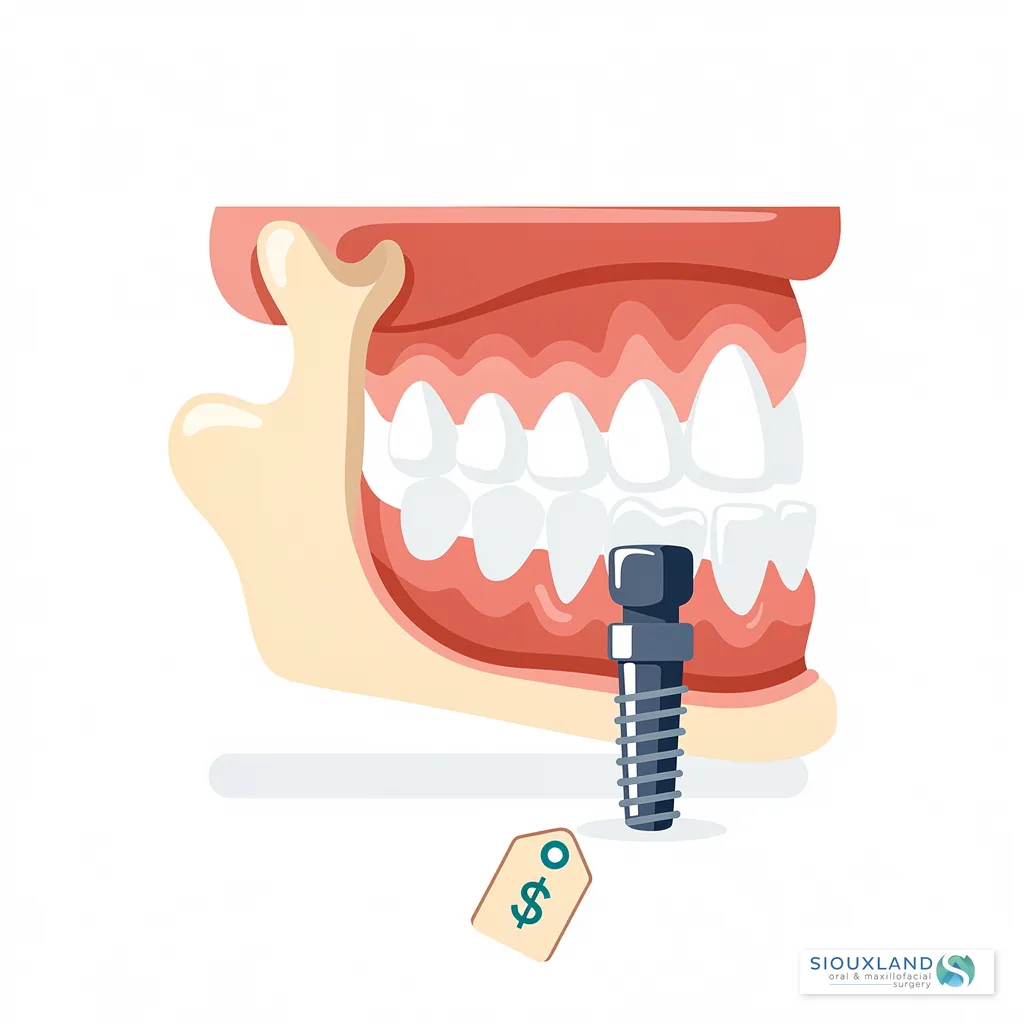
Bone grafting costs typically range from $300 to $5,148, depending on graft type, location, and complexity. Synthetic grafts often cost $300 to $800 per implant site. Grafts using your own bone reach $2,500 to $3,500 due to added surgical and anesthesia requirements. Your surgeon determines exact pricing after evaluating your jawbone condition during consultation.
What Determines Bone Grafting Cost Before Implants?
Graft material and case complexity drive the final price you pay before implant placement. Bone grafting cost for a dental bone graft can vary between $549 and $5,148, according to CareCredit’s Dental Bone Graft Cost and Procedure Guide, and several factors within that range affect where your treatment lands.
The type of bone material used makes the biggest difference. A straightforward graft built from synthetic bone typically costs less per implant site than one using bone harvested from your own body. Grafts sourced from your own bone require additional surgical steps, plus coordination with extra specialists, which raises the price compared to synthetic alternatives.
Why does using my own bone cost more than synthetic material?
Harvesting your own bone means an extra surgical procedure just to collect the material. That step adds time, staffing, and complexity to your treatment plan. The result is a noticeably higher price range compared to synthetic grafting options.
How does Siouxland determine how much grafting I need?
Your surgical team uses 3D imaging at Siouxland’s Sioux Falls facility to evaluate the exact volume of bone available in your jaw. This imaging shows precisely where deficiencies exist and how much grafting material your case requires. Because every jaw heals and rebuilds differently, this technology helps avoid over-treating or under-treating your site.
Advanced imaging and refined surgical techniques keep bone grafting and implant placement efficient, safe, and predictable. Rather than guessing at your needs, your surgeon builds a treatment plan grounded in precise measurements. That precision protects both your outcome and your investment.
Why Do Most Implant Patients Need Grafting?
More than half of all dental implant patients need a bone graft before their surgeon can place the implant. CareCredit‘s guide on dental bone graft procedures puts the figure at around 58% of all implant cases today, with that share projected to climb to about 60% by 2027. Your jawbone shrinks after tooth loss, and grafting rebuilds the density and volume needed to anchor a new tooth root securely.
Think of a graft as scaffolding. Bone grafts add material to your jaw so it gains the strength. Thickness required to hold an implant in place long-term. Without enough bone, an implant has nothing stable to fuse with, which raises your risk of implant failure down the road.
Understanding your options matters just as much as understanding the bone grafting cost attached to them. Patients weighing treatment often ask a related question before scheduling anything.
Is bone grafting always required before an implant?
No — grafting depends entirely on how much healthy bone remains in your jaw. Patients who lost teeth years ago. Who had gum disease, typically show more bone loss and need grafting more often. A surgeon determines this through imaging during your consultation, not guesswork.
Who evaluates whether you need a graft?
Experience matters here. Dr. Denis Miller has practiced oral and maxillofacial surgery since 1998, bringing decades of judgment to bone assessments. Dr. Louis George joined the practice in 2007, adding further depth to the team’s grafting and implant expertise. Together, that experience helps patients avoid guesswork, whether you’re researching bone grafting in Sioux Falls or scheduling care closer to home.
How Does Your Location Affect Grafting Costs?
Geography shapes your final bill more than most patients expect. Full implant treatment, grafting included, can run anywhere from $1,500 to $6,500 depending on where you live and the complexity of your case. That gap exists because regional overhead, surgeon availability, and case difficulty all shift the math from one city to the next.
Access to nearby specialists matters just as much as price alone. Siouxland Oral & Maxillofacial Surgery operates four locations across Sioux Falls, Mitchell, Yankton, and Brookings, putting bone grafting in Sioux Falls-level regional convenience within reach for patients across the area. You avoid long drives for consultations, grafting appointments, and follow-up care when a surgical office sits close to home.
Does the surgeon’s experience affect what you pay?
Surgical skill influences both outcomes and value, not just the sticker price. Dr. Jason Leet completed dental school in 2013 at the University of Minnesota, bringing current surgical training into every consultation at each Siouxland office. That training shapes how your case gets planned, including whether grafting material, healing support, or additional imaging factors into your treatment.
What else affects your total grafting bill besides location?
Healing support plays a real role in your overall bone grafting cost. Siouxland incorporates plasma-rich plasma treatments into grafting protocols to support tissue healing. That service gets factored into treatment planning before you ever sit in the chair.
Consider these regional and clinical factors together:
Proximity to a surgical office in Sioux Falls, Mitchell, Yankton, or Brookings
Surgeon training and current technique
Use of healing-support treatments like plasma-rich plasma
Complexity of your individual jawbone condition
A consultation at your nearest location gives you the clearest, most accurate estimate for your situation.
What Other Implant Costs Should You Expect?
The implant screw represents one of the largest single expenses in your overall treatment. This titanium post replaces your natural tooth root. Fuses directly with the jawbone, giving your new tooth a stable foundation. Pricing for the screw alone typically makes up the biggest chunk of your total investment before you even factor in grafting.
Beyond the screw, two additional components complete the restoration. Your abutment connects the implant to the visible crown above the gumline. The crown itself is custom-shaped to match your smile. Together, these pieces add meaningfully to whatever you’ve already budgeted for graft material and the implant post.
Does Every Patient Need the Same Combination of Treatments?
No — treatment complexity varies significantly from patient to patient. Some cases involve straightforward grafting and implant placement. Others require corrective jaw surgery when bite alignment or jaw positioning complicates implant success. Oral surgeons trained in orthognathic surgery can plan these procedures together. Your grafting, jaw correction, and implant placement work toward one coordinated outcome rather than separate, disconnected treatments.
What Advanced Techniques Might Affect My Treatment Plan?
Surgical technique matters just as much as materials. Laser-assisted soft palate procedures illustrate how modern tools shape a more precise, better-planned surgical experience. Your surgeon factors these advanced options into your estimate whenever they improve healing or reduce complications.
Consider these components when reviewing any implant estimate:
Implant screw — the root replacement, often the largest cost
Abutment — connects the screw to the crown
Crown — the visible, custom-matched tooth
Grafting materials — needed when bone volume is insufficient
Advanced surgical techniques — including orthognathic and laser-based procedures for complex cases
Whether you’re researching bone grafting cost locally or comparing bone grafting in Sioux Falls against other regions, ask your surgeon for an itemized breakdown before treatment begins.
How Can Siouxland Guide Your Treatment Plan?
Siouxland Oral & Maxillofacial Surgery, Official legal and professional identity, guides your grafting and implant plan through precise imaging and surgeon-level oversight. Your treatment starts with a clear picture of your jawbone, not a guess. That clarity shapes every dollar you spend and every decision that follows.
At the Sioux Falls facility, your surgeon uses 3D imaging to evaluate the density and shape of your jawbone before recommending a grafting and implant plan. This detailed view lets your surgical team pinpoint exactly how much bone you need and where, rather than relying on a standard estimate. You get a plan built around your anatomy, not a generic template.
Does Siouxland offer anything to speed up healing after a graft?
Yes. Your surgeon can incorporate plasma-rich plasma treatments into your grafting plan to support faster, more predictable healing. This approach uses concentrated growth factors from your own blood, applied directly to the graft site.
Who actually plans my surgery at Siouxland?
Your consultation isn’t handed off to a generalist. Dr. Denis Miller, co-owner of the practice, brings ownership-level accountability to every grafting and implant case he evaluates. Dr. Louis George, also a co-owner, shares that same investment in your outcome. Rounding out the team, Dr. Jason Leet completed his dental training in 2013 at the University of Minnesota, adding a current surgical perspective to treatment planning.
Together, this leadership structure means your plan reflects combined clinical judgment, not a single rushed opinion.
FAQ
What is the typical cost range for bone grafting before dental implants?
Bone grafting costs typically range from $300 to $5,148, depending on graft type, location, and complexity. Synthetic grafts cost $300 to $800 per site, while grafts using your own bone run $2,500 to $3,500 due to the additional surgical steps involved. Your surgeon confirms exact pricing after evaluating your jawbone during consultation.
Why do most dental implant patients need a bone graft?
More than half of all implant patients need grafting before implant placement — CareCredit puts the figure at around 58% of cases today, climbing toward 60% by 2027. Bone naturally shrinks after tooth loss, and grafting rebuilds the density and volume your jaw needs to hold an implant securely.
How does Siouxland determine how much bone grafting I need?
Your surgical team uses 3D imaging at Siouxland’s facilities to evaluate exactly how much bone is available in your jaw and where deficiencies exist. This precision helps avoid over-treating or under-treating your case, so your bone grafting cost reflects only what your treatment actually requires.
Does bone grafting cost more depending on where I live?
Yes — full implant treatment, grafting included, can range from $1,500 to $6,500 depending on your region and case complexity. Siouxland Oral & Maxillofacial Surgery operates locations in Sioux Falls, Mitchell, Yankton, and Brookings, so patients across the area can access experienced surgical care without long-distance travel for bone grafting in Sioux Falls or nearby communities.
Who evaluates whether I need a bone graft at Siouxland?
Dr. Denis Miller has practiced oral and maxillofacial surgery since 1998, and Dr. Louis George joined the practice in 2007 — together they bring decades of surgical judgment to every grafting evaluation. That experience helps ensure your treatment plan and bone grafting cost are based on your actual anatomy, not guesswork.
Conclusion
In closing, bone grafting represents a critical investment in your long-term oral health and the success of your dental implant restoration. While costs vary based on individual clinical needs. Graft complexity, our board-certified surgeons at Siouxland Oral & Maxillofacial Surgery provide transparent guidance throughout your treatment planning. With advanced diagnostic imaging and proven surgical techniques, we ensure your bone grafting procedure delivers the foundation necessary for optimal implant outcomes and lasting confidence in your smile.