
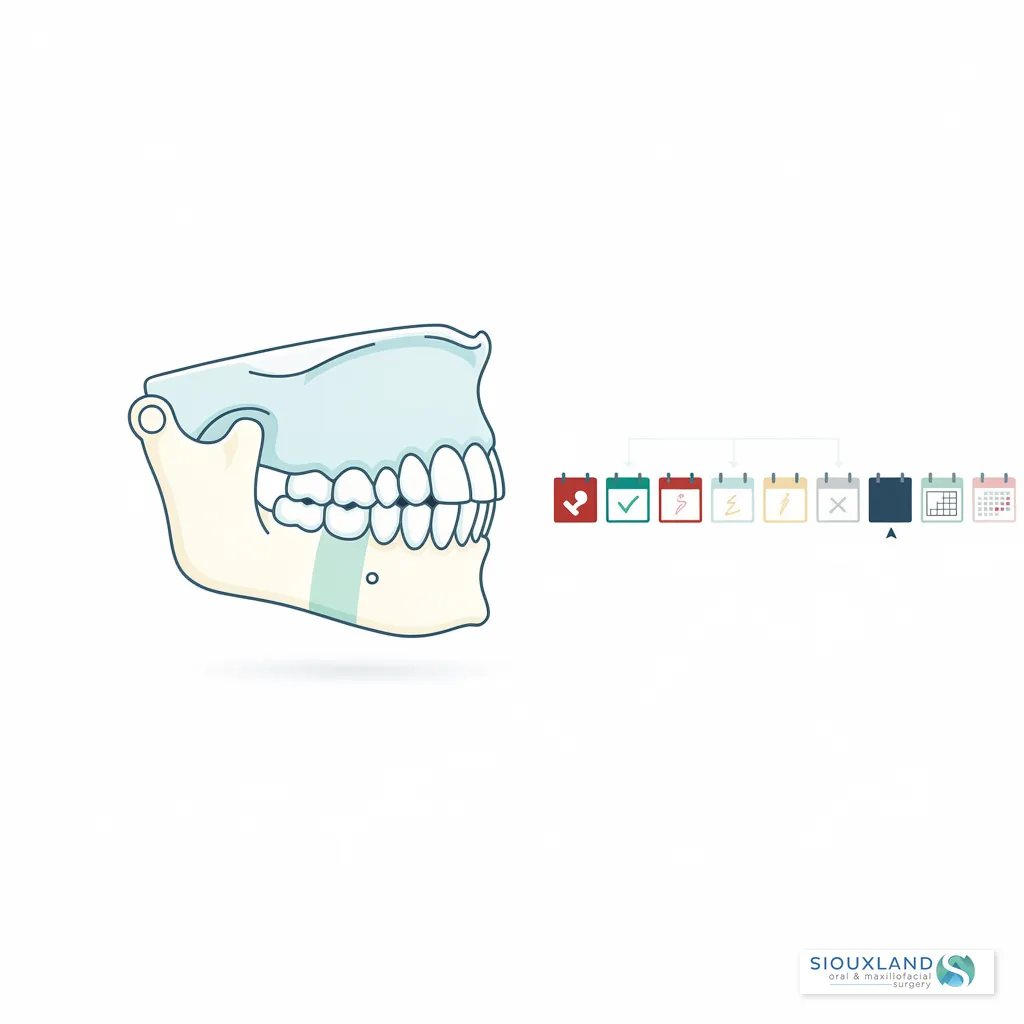
Dental bone graft recovery unfolds in stages: initial healing takes about a week, with tenderness, swelling, and bruising subsiding within one to two weeks. Full bone integration requires at least three months before implant placement, though larger grafts demand nine to 12 months. Following your surgeon’s aftercare instructions protects the healing graft and supports a successful implant foundation.
What Should You Prepare Before Bone Graft Surgery?
Preparation starts with accurate imaging and a clear surgical plan, not with the day of your appointment. Skipping this groundwork raises your risk of complications. Can extend your bone graft recovery time well beyond what a properly planned case requires. At Siouxland Oral & Maxillofacial Surgery, the Sioux Falls facility integrates 3D imaging technology. Your surgeon can map bone volume and plan graft placement with precision before the procedure begins.
Follow these steps in the weeks leading up to surgery:
Complete a consultation and imaging appointment so your surgeon can assess bone structure using 3D imaging.
Review your medical history and current medications with your surgical team.
Arrange transportation home, since anesthesia affects your ability to drive safely afterward.
Stock soft foods and OTC pain relievers before surgery day, not after.
Confirm post-op instructions with your surgeon so you know exactly what activity restrictions apply.
Who Will Be Performing My Bone Graft?
Your graft is placed by an experienced, credentialed surgical team, not a general practitioner unfamiliar with jaw anatomy. Siouxland’s surgical team includes Denis Miller, DDS, MBA; Louis George, DMD; and Jason Leet, DDS. Dr. Miller has practiced as an oral and maxillofacial surgeon since 1998, bringing decades of hands-on grafting experience to complex cases.
Does Where I Have Surgery Matter?
Yes. Facility technology directly affects surgical accuracy and healing outcomes. Siouxland Oral & Maxillofacial Surgery is located in Sioux Falls, SD, US. Precise mapping reduces surprises during surgery and supports a smoother recovery.
What Happens During the First Week of Healing?
Swelling, mild tenderness, and light bruising mark the days immediately following surgery. Most patients notice these symptoms peak within 48 to 72 hours before gradually fading. Cleveland Clinic identifies tenderness, swelling, and bruising as normal side effects of dental bone grafting. These signs typically clear within one to two weeks.
Initial bone graft recovery time runs roughly seven days for most patients, according to Cleveland Clinic. Though the graft material itself needs far longer, often a minimum of three months, to fully fuse with your jawbone. That distinction matters. Feeling better within a week does not mean the graft has finished healing beneath the surface. Treat the surgical site gently even after visible symptoms subside.
At Siouxland Oral & Maxillofacial Surgery, your surgical team may use plasma-rich plasma treatments during the procedure to support tissue repair. This approach encourages faster graft integration during those critical early days, giving your body an extra advantage as new tissue forms around the graft material.
During week one, expect to follow this general pattern:
Days 1–2: Swelling and tenderness peak; rest and keep your head elevated.
Days 3–4: Bruising may appear or deepen, even as swelling starts to ease.
Days 5–7: Discomfort continues fading; most patients resume light daily activities.
Patients researching bone grafting in Sioux Falls or any other city can expect this same general early-healing pattern. Tissue response follows similar biological stages regardless of location.
Is Bleeding Normal in the First Week?
Light oozing or pink-tinged saliva can appear during the first day or two after grafting. Heavy or persistent bleeding is not typical and warrants a call to your surgical team. Gentle pressure with clean gauze usually resolves minor bleeding within minutes.
How Does Healing Progress From Weeks Two Through Twelve?
Steady bone formation defines weeks two through twelve. Soft tissue gives way to the denser structure your future implant needs. Swelling and tenderness fade quickly, but the real work happens beneath the surface. Your body slowly converts the graft material into living bone. Your surgeon monitors this progress at scheduled follow-ups to confirm the site is healing on track.
Follow these steps to support healing during this stretch:
Keep every follow-up appointment so your surgical team can track new bone formation and catch complications early.
Continue gentle rinsing and brushing around the graft site as directed, avoiding direct pressure or trauma to the area.
Reintroduce normal foods gradually, moving from soft textures back to your regular diet as comfort allows.
Resume moderate exercise only after your surgeon confirms the graft has stabilized enough to tolerate increased blood flow.
Report any unusual swelling, drainage, or pain spikes immediately rather than waiting for your next scheduled visit.
When Does a Bone Graft Fully Integrate With the Jaw?
Timelines vary by graft size and your individual healing response. A standard graft often reaches sufficient density within the twelve-week window, but larger grafts extend well beyond that. According to Cleveland Clinic, a large bone graft recovery time may stretch to nine or twelve months before the site is ready for an implant.
Why Does Graft Size Change the Healing Timeline?
Larger volumes of grafted material require more time for blood vessels to grow through the site. For new bone cells to replace the graft matrix. Complex cases benefit from surgeons with deep reconstructive experience. Louis George, DMD, has contributed surgical expertise to challenging grafting cases at Siouxland Oral & Maxillofacial Surgery since joining the practice in 2007. That structural foundation, once fully integrated, becomes the support your restoration will depend on for years to come.
When Is a Bone Graft Ready for Implants?
Readiness depends on graft size, bone density at the site, and how your body responds during healing. A larger graft demands more patience, while a smaller site-preservation graft matures faster. Generally, the graft itself needs at least three months to heal properly, even though initial tenderness fades within about a week. That timeline shapes your bone graft recovery time and determines when implant placement can safely proceed.
Your surgical team evaluates readiness rather than guessing at a calendar date. Dr. Jason Leet, DDS, who completed dental school in 2013 at the University of Minnesota, brings current surgical training to this evaluation, checking bone density and integration through imaging before clearing you for the next step. Denis Miller, DDS, MBA, co-owner of Siouxland Oral & Maxillofacial Surgery, helps guide these decisions alongside the surgical team, ensuring the graft has matured enough to support a stable implant foundation.
How do you know if your graft has healed enough?
Your surgeon confirms readiness through follow-up imaging, not just how the site feels. Firm, pain-free tissue is a good sign, but true integration happens beneath the surface. If you notice ongoing swelling, looseness, or discomfort beyond the expected window, tell your surgeon immediately rather than waiting for your next scheduled visit.
If your jaw alignment complicates implant placement, don’t assume you’re stuck. Siouxland Oral & Maxillofacial Surgery offers bone grafting in Sioux Falls patients trust, paired with orthognathic surgery for those needing structural correction before implants proceed. That combination protects your long-term bite function and implant success:
Graft maturity confirmed through imaging
Jaw alignment assessed for surgical correction needs
Implant timing coordinated with your surgical team
What Mistakes Should You Avoid During Recovery?
Skipping follow-up visits ranks among the most common errors after bone graft surgery. Ignoring pain signals or ditching your medication plan altogether causes unnecessary setbacks too. Your bone graft recovery time depends heavily on how carefully you follow post-operative instructions during the first several days.
Many patients assume discomfort means something went wrong, so they stop taking prescribed or recommended medication. That reaction backfires. Discomfort during healing can usually be managed with over-the-counter pain relievers, and abandoning that guidance often makes swelling and soreness worse rather than better.
Why does missing follow-up appointments matter so much?
Follow-up visits let your surgical team check graft placement and catch problems early. Delaying or skipping these checkups risks complications going unnoticed until they become harder to treat. You can schedule follow-up care at any of four convenient locations in Sioux Falls, Mitchell, Yankton, or Brookings. Distance rarely justifies missing an appointment.
Avoid these common missteps during recovery:
Discontinuing pain management without guidance from your surgical team
Missing scheduled follow-up visits at your treatment location
Resuming strenuous activity before clearance
Disturbing the graft site with fingers, straws, or aggressive rinsing
Consistency matters more than intensity here. Small daily habits protect your healing timeline far more than dramatic gestures ever could.
FAQ
How long does initial dental bone graft recovery take?
Initial healing takes about one week, with tenderness, swelling, and bruising peaking within 48 to 72 hours before subsiding over one to two weeks.
How long until the bone graft fully integrates with my jaw?
Full bone integration requires a minimum of three months before implant placement. Larger grafts require nine to 12 months for complete healing and stability.
What technology does Siouxland use to plan bone graft surgery?
The Sioux Falls facility integrates 3D imaging technology, letting your surgeon map bone volume and plan graft placement precisely before the procedure begins.
Conclusion
In closing, understanding your dental bone graft recovery timeline empowers you to approach treatment with confidence and realistic expectations. The healing process unfolds gradually, requiring patience and adherence to post-operative care instructions to achieve optimal osseointegration. Our board-certified oral surgeons at Siouxland Oral & Maxillofacial Surgery guide patients through each phase of recovery, utilizing advanced techniques and technologies to support successful outcomes. When you’re ready to discuss your bone grafting needs, our experienced team across our four convenient locations stands prepared to deliver the expert care you deserve.