
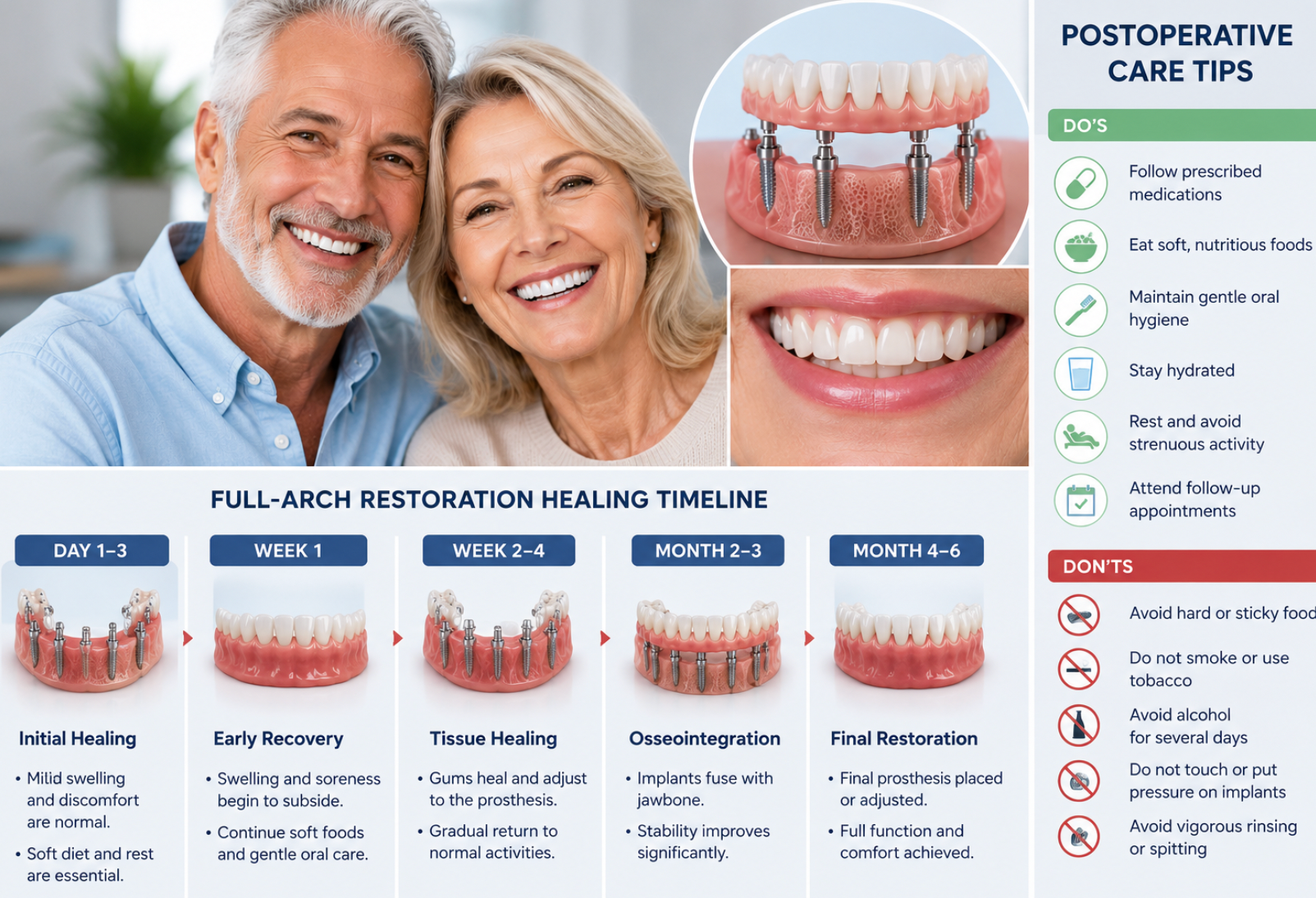
Healing after a full-arch restoration follows defined stages that directly affect clinical outcomes and patient satisfaction. Clear expectations about the recovery timeline—from the immediate postoperative period to complete osseointegration—help patients prepare and cooperate with care plans. This article outlines the expected recovery phases, evidence-based postoperative instructions, dietary guidance, pain control strategies, follow-up protocols, and potential complications so patients can approach recovery with clarity and confidence.
Healing Timeline and Postoperative Care for Full-Arch Restoration
Knowing the expected stages of recovery lets patients recognise progress and follow postoperative instructions that protect healing. The recovery pathway typically includes immediate recovery, initial tissue repair, and the longer process of implant integration, each with distinct care priorities and monitoring needs.
Typical Recovery Timeline:
The healing sequence proceeds in measurable stages, each indicating clinical milestones during recovery. Below is a concise overview of the typical timelines associated with full-arch restoration.
- Immediate Recovery (0-2 weeks): This phase involves the initial postoperative period where patients may experience swelling, bruising, and discomfort. It is critical to follow instructions for pain management and rest during these first days.
- Initial Healing (2-6 weeks): Patients typically begin noticing improvements in comfort and a decrease in swelling during this phase. Following dietary recommendations, such as consuming soft foods, becomes vital to facilitate healing and comfort.
- Full Recovery (6 weeks – several months): During this timeframe, osseointegration occurs, where the implants integrate securely with the jawbone. Complete healing can take several months, often requiring regular follow-ups to monitor recovery progression.
Expert Tips for Postoperative Care:
Optimising recovery requires systematic postoperative care: consistent pain control, a nutrient-focused soft diet, strict oral hygiene measures, and scheduled clinical reviews. Each element reduces complication risk and supports implant stability. For comprehensive dental care and expert advice, consider the services offered at Siouxland Oral Surgery.
Pain Management:
Manage postoperative discomfort through prescribed analgesics and adjunctive measures. Follow the medication schedule provided by your surgical team. Use cold packs in the first 48 hours to reduce swelling and rest to aid recovery. Report uncontrolled pain promptly to your provider for timely assessment.
Dietary Recommendations:
A soft, nutrient-dense diet supports tissue repair while minimising mechanical stress on surgical sites. Choose protein-rich smoothies, broths, puréed vegetables, and well-cooked grains. Maintain adequate fluid intake and avoid hard, crunchy, or sticky foods that could irritate the graft or implant sites.
Follow-Up Care:
Planned follow-up visits let the dental team assess wound healing, monitor osseointegration, and intervene early if issues arise. Keep scheduled appointments and communicate any concerns between visits. For additional information, review the resources available here.
What Is the Typical Healing Timeline for Full Arch Dental Implant Recovery?
Recovery after full-arch implant surgery depends on individual health status, oral conditions, and adherence to postoperative instructions. Typical expectations include initial tissue repair within the first two weeks, progressive improvement over several weeks, and implant integration that may take multiple months before final restorations are placed.
- 0-2 weeks: Initial tissue healing occurs, and postoperative symptoms such as discomfort and swelling are commonly experienced.
- 2-6 weeks: The majority of swelling subsides, and daily activities can gradually resume, although care should still be emphasized.
- 6 weeks – several months: Continued osseointegration leads to increased stability of implants, facilitating the eventual placement of a permanent restoration.
What Are Essential Postoperative Care Instructions After Full Arch Restoration Surgery?
Adherence to clear postoperative instructions reduces complications and promotes predictable outcomes. Core directives include timely use of prescribed medications, dietary adjustments to protect surgical sites, and gentle oral hygiene to maintain a clean environment for healing.
- Medication Management: It is essential to take prescribed medications, including antibiotics and pain relievers, on time.
- Dietary Adjustments: As previously mentioned, maintaining a soft food diet will promote healing and aid in comfort.
- Oral Hygiene Practices: Gentle oral hygiene routines should begin as recommended by the dental team to maintain cleanliness around the surgical site.
How Should Patients Manage Pain and Swelling Effectively?
Effective symptom control combines rest, local measures, and medication adherence. Rest limits exertion that can exacerbate swelling. Apply ice intermittently in the early postoperative period and follow the analgesic plan your surgeon prescribes to maintain comfort.
- Rest and Recovery: Sufficient rest is necessary to facilitate healing. Minimizing physical exertion helps reduce swelling.
- Ice Application: Applying ice packs to swollen areas during the initial days can help decrease inflammation.
- Medication Compliance: Using prescribed pain medications as directed can minimize discomfort and keep swelling under control.
What Dietary Recommendations Support Optimal Implant Healing?
Nutrition supports tissue repair and immune function during recovery. Prioritise easily chewed, high-protein items and antioxidant-rich foods while maintaining hydration. Avoid foods that risk trauma to the surgical area.
- Soft Foods: Opting for soft, nutritious foods can help ease discomfort while ensuring adequate nutrition.
- Hydration: Staying properly hydrated is essential for optimal healing.
- Avoiding Certain Foods: Harsh or hard foods should be avoided to prevent compromising the surgical area.
Which Potential Complications Should Patients Monitor During Recovery?
Recognising early warning signs enables timely clinical intervention. Be vigilant for infection indicators and any changes in implant stability; prompt evaluation reduces the risk of long-term issues.
- Signs of Infection: Symptoms such as increased pain, fever, or unusual swelling should prompt immediate contact with the dental team.
- Implant Stability Issues: Any noticeable movements where the implant is secured may indicate poor osseointegration, requiring professional evaluation.
What Are Common Signs of Infection or Implant Failure?
Patients should note symptoms that fall outside the expected healing pattern. Persistent or escalating pain, abnormal swelling, and any purulent discharge require urgent assessment by the surgical team to rule out infection or compromised implant stability.
- Unusual Swelling: Significant swelling beyond the expected range should be reported.
- Persistent Pain: Pain that worsens despite following postoperative care instructions may signal an underlying issue.
- Discharge: Any pus-like discharge at the surgical site is a clear sign of infection that necessitates immediate consultation.
How Can Patients Prevent Postoperative Complications?
Preventive measures centre on disciplined self-care and clear communication with the dental team. Follow prescribed protocols, maintain hygiene, and report deviations from expected healing promptly to allow early management.
- Strict Adherence to Instructions: Following the dental team’s postoperative care plan is critical.
- Maintaining Oral Hygiene: Proper oral care protects against infection and supports healing.
- Remaining Vigilant: Regularly assessing any changes or symptoms that arise ensures early intervention if issues occur.
How Can Patients Set Realistic Expectations for Full Mouth Implant Surgery Recovery?
Realistic expectations come from understanding personal health factors and the staged nature of healing. Accept that some discomfort is normal, that timelines vary, and that adherence to care plans accelerates recovery and reduces risks.
- Individual Healing Rates: Each person’s recovery can vary widely based on health, age, and adherence to care routines.
- Potential for Discomfort: Understanding that some level of discomfort is expected post-surgery enables better personal management.
- Timeline Variability: Individual factors might extend or shorten the recovery timeline.
What Is the Expected Duration of Recovery Following Full-Arch Restoration?
Recovery length varies but generally spans several weeks to several months. Early tissue repair occurs quickly, while implant integration and final prosthetic placement follow over a longer course with regular clinical monitoring.
What Do Patient Testimonials Reveal About Recovery Experiences?
Patient testimonials commonly describe successful outcomes when patients follow postoperative instructions and attend follow-up care. Testimonials also acknowledge common discomforts and the value of clinical support and family assistance during recovery.
- Positive Healing Journeys: Many patients report successful healing with proper care and attention to instructions.
- Common Challenges: Recognizing common challenges encountered helps new patients feel prepared for their own journeys.
- Support Systems: Testimonials also highlight the importance of support systems, including family and dental professionals, in managing recovery.
Which Related Procedures Impact Healing and Recovery Outcomes?
Adjunctive procedures such as bone grafting and extractions influence the overall recovery plan and timing. When extractions are required, careful surgical technique and postoperative care are essential to preserve the foundation needed for successful implant placement. If you need a tooth extraction, tooth extraction is a procedure that requires careful consideration during the recovery phase.
How Does Bone Grafting Affect the Healing Timeline?
Bone grafting alters the sequence and duration of healing by introducing a required period for graft consolidation. This typically extends the timeline before implant placement and necessitates close monitoring for graft integration and infection prevention.
- Extended Recovery: Bone grafting typically requires additional healing time before implants can be placed, often extending the overall recovery.
- Monitoring for Complications: Patients should be diligent in monitoring graft sites for signs of infection or failure.
What Role Do Extractions Play in Full-Arch Restoration Recovery?
Extractions initiate the healing cascade and set the conditions for subsequent implant procedures. Proper postoperative care of extraction sites supports optimal tissue healing and reduces the risk of complications that could delay implant therapy.
- Initial Healing Phase: The recovery experience begins immediately post-extraction, which can set the stage for implant success.
- Timely Follow-Ups: Regular follow-up appointments ensure any issues with extraction sites are swiftly addressed.
What Are Best Practices for Maintaining Oral Hygiene After Full Arch Implant Surgery?
Appropriate oral hygiene prevents infection and supports soft-tissue healing. Use gentle, methodical techniques and any prescribed antimicrobial agents, and schedule professional cleanings as directed by your dental team to protect long-term implant health.
- Gentle Brushing: Implementing gentle brushing techniques around the surgical area prevents irritation.
- Antimicrobial Rinses: Using prescribed rinses can help reduce the risk of infection.
- Scheduled Cleanings: Regular professional cleanings should be arranged as advised by the dental team for optimal long-term care.
Which Oral Hygiene Techniques Minimize Infection Risks?
Use soft-bristled brushes and minimal pressure near surgical sites. Perform gentle rinses as recommended and avoid tobacco and alcohol, which impair mucosal healing and increase infection risk.
- Soft Brushing Methods: Patients should carefully brush with soft bristles and minimal pressure around surgical sites.
- Effective Rinsing: Incorporating gentle rinsing techniques can help maintain cleanliness and promote healing.
- Avoiding Irritants: Staying away from irritating substances, such as tobacco and alcohol, supports a smoother recovery.
How Can Nutritional Support Enhance Tissue Healing?
Dietary intake affects collagen synthesis and immune response. A balanced diet with adequate protein, vitamins, and hydration supports tissue repair and reduces recovery time when combined with appropriate clinical care.
- Nutritional Variety: A well-rounded diet, rich in vitamins and minerals, contributes to overall recovery.
- Hydration Importance: Proper hydration supports bodily functions involved in healing.
- Nutrient-Rich Foods: Focusing on foods high in protein and antioxidants can promote tissue repair post-surgery.
For convenient financial arrangements for your dental procedures, you can explore options for making a payment.
Frequently Asked Questions
1. Can I smoke after my full-arch restoration surgery?
Smoking increases the risk of infection and delayed osseointegration. Avoid tobacco for at least several weeks after surgery; long-term cessation improves oral and systemic healing. If you smoke, discuss cessation strategies with your care team to support the best outcome.
2. How soon can I return to work after my surgery?
Return-to-work timelines depend on your procedure and job demands. Many patients can resume sedentary work within a few days, while physically demanding roles may require an extended recovery period. Follow your surgeon’s guidance and prioritise gradual resumption of activities.
3. What should I do if I experience severe pain after surgery?
Contact your dental provider immediately if you develop severe or worsening pain. While moderate discomfort is expected, severe pain may indicate infection or another complication that requires prompt clinical evaluation and intervention.
4. Are there specific instructions for taking care of my surgical site?
Yes. Avoid vigorous rinsing, spitting, and using straws for at least 48 hours to prevent dislodging clots. Begin gentle brushing as advised and use prescribed antimicrobial rinses to reduce infection risk and support mucosal healing.
5. What signs indicate that I need to seek medical attention after my procedure?
Seek immediate care for persistent or worsening pain, fever, marked swelling, or any purulent discharge. These symptoms may indicate infection or compromised implant stability and warrant urgent assessment by your dental team.
6. How can I manage anxiety or stress related to my recovery process?
Anxiety is common; use paced breathing, mindfulness, or gentle relaxation exercises to reduce stress. Education about the recovery stages and regular communication with your care team also provide reassurance. Ask your provider about additional support if anxiety affects recovery.
7. When can I resume normal eating habits after my surgery?
Reintroduce firmer foods gradually and only as comfort and healing permit. Maintain a soft diet for at least the first six weeks or until your clinician advises otherwise. Advance your diet based on clinical assessments and personal tolerance.
Conclusion
Successful recovery after full-arch restoration depends on adherence to the recovery timeline and evidence-based postoperative care. Prioritise pain control, nutrition, hygiene, and follow-up visits to reduce complications and improve long-term outcomes. For personalised guidance and support throughout recovery, contact our team at Siouxland Oral Surgery.