
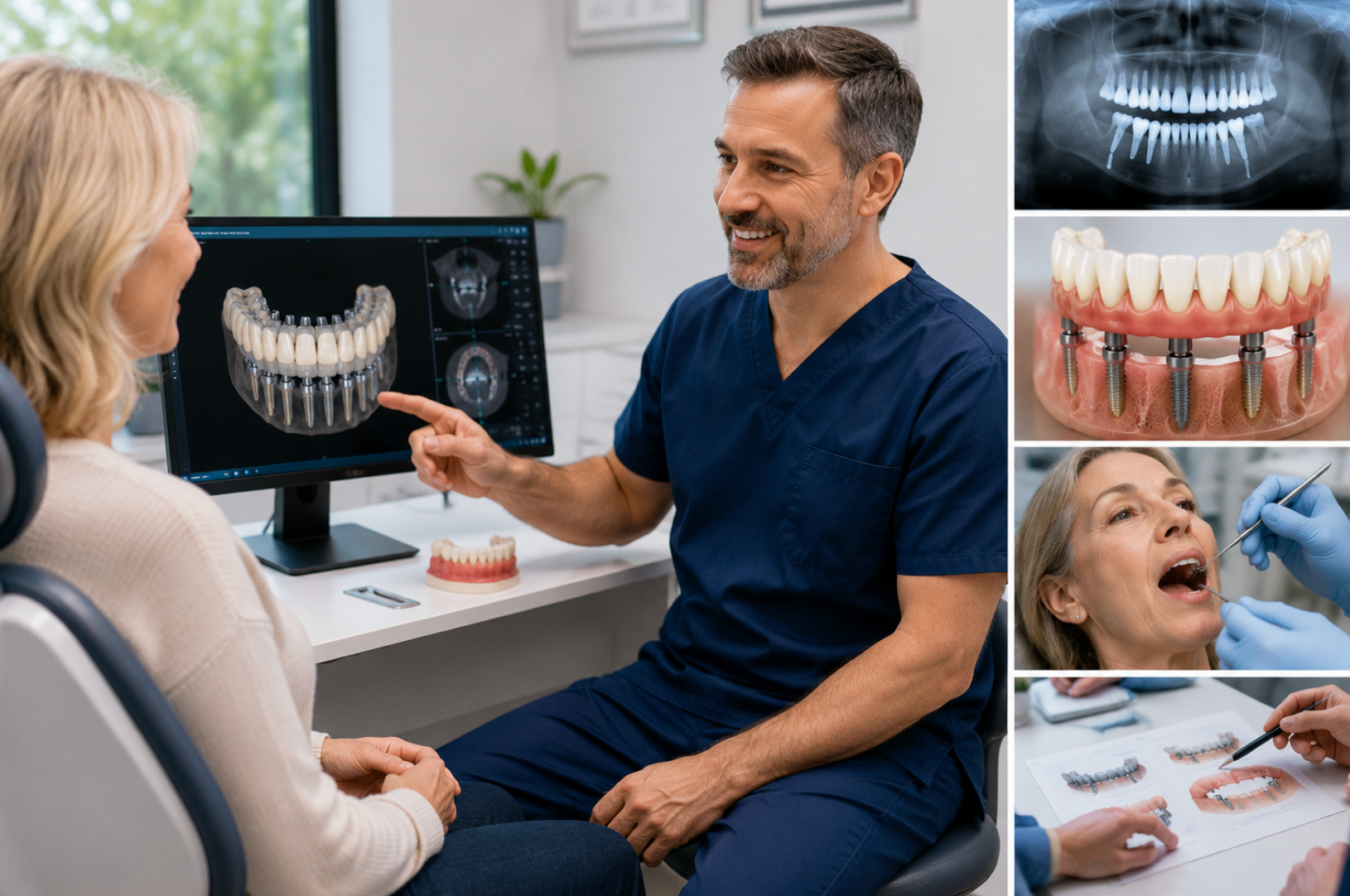
Choosing a full-arch restoration is a major, restorative step that can improve oral function and quality of life. Knowing the consultation stages helps you make informed decisions and feel secure about the care process. This overview explains each consultation step—from initial assessment to tailored treatment planning—addresses common concerns, and clarifies the dental team’s role in guiding you through implant therapy and related procedures. Use this outline to prepare and understand what will occur at each visit.
Initial Consultation
The initial consultation establishes the clinical baseline and clarifies your goals. You will meet the dental professionals who will review your oral health, discuss your expectations, and outline potential treatment pathways, including risks and benefits related to implant therapy. This focused assessment informs an individualized plan and ensures your concerns guide clinical decisions.
This first visit also addresses logistics such as anticipated outcomes, timelines, and financial considerations. Establishing clear communication and trust at this stage supports safer, more predictable treatment and a better patient experience.
Diagnostic Imaging
Diagnostic imaging provides the objective data clinicians need to plan implant procedures accurately. Clinicians commonly use radiographs and advanced 3D imaging to visualise bone anatomy, sinus positions, and adjacent structures that affect implant placement.
These images allow precise assessment of bone volume and anatomical landmarks, reduce intraoperative uncertainty, and improve surgical predictability. Accurate imaging is essential to design a safe, effective implant strategy tailored to each patient.
Personalized Treatment Planning
Personalized planning combines clinical findings, imaging data, and your treatment objectives to define the optimal restorative approach. The team reviews all diagnostic information to recommend implant locations, prosthetic options, and any preparatory procedures required for a successful outcome.
At Siouxland Oral Surgery, we collaborate with patients to create plans that match their oral health status and lifestyle. This targeted approach helps ensure the chosen implants and restorations meet functional needs and patient expectations.
Discussion of Options and Expectations
During this stage, the clinician explains available options, including implant types, restorative materials, and prosthetic designs such as fixed or removable arches. The discussion contrasts benefits and limitations so you can weigh functional and aesthetic trade-offs.
Clear, two-way communication about expected results and recovery timelines supports confident decision-making. Patients are encouraged to ask questions and discuss concerns so the plan aligns with their priorities.
Oral Exam Process
The oral exam evaluates implant candidacy through a clinical inspection combined with medical-history review and imaging analysis. This assessment identifies factors that affect implant success and informs the overall treatment strategy.
How Does the Full-Arch Dental Implant Consultation Begin with Oral Examination for Implant Candidacy?
The process starts with a comprehensive clinical evaluation by a dental professional, including assessment of existing teeth, periodontal health, and jawbone anatomy to determine implant suitability. The clinician will review your dental and medical history, noting prior surgeries or treatments that could influence planning. If tooth extraction is required before restoration, the team will explain the specific extraction approach.
What Key Steps Are Included in the Oral Exam for Assessing Implant Suitability?
Several key steps are involved in evaluating a patient’s suitability for dental implants. These include:
- Comprehensive Initial Consultation: The patient’s overall oral health and comfort level are discussed.
- Radiographic Imaging: X-rays or 3D scans are utilized to get a complete picture of the jawbone and surrounding areas.
- Evaluation of Bone Density: Understanding the bone density is pivotal for determining regions where implants can be placed effectively.
Each element of this assessment is designed to reduce risk and support predictable, long-term implant function.
How Does 3D Imaging Enhance Evaluation and Support Precise Treatment Planning?
High-resolution 3D imaging delivers detailed, multiplanar views of bone contours and adjacent anatomy, enabling clinicians to evaluate both bone quantity and quality. This level of detail helps identify anatomic limitations and plan implant positions with surgical precision.
Better visualisation reduces intraoperative surprises, helps anticipate potential complications, and supports accurate implant placement that improves success rates and patient safety.
Essential Implant Treatment Planning Steps During Your Consultation
The essential steps in the implant treatment planning process typically include:
- Initial Consultation and Imaging: Gathering essential data about the patient’s oral and systemic health.
- Bone Density Assessment: Evaluating the jawbone’s structure to inform implant placement.
- Health Evaluation: Discussing the patient’s overall health, allergies, and medical conditions that could affect the treatment.
Together, these steps create the clinical framework for a safe, customised full-arch restoration.
How Is a Personalized Full-Arch Restoration Plan Developed to Ensure Optimal Outcomes?
Developing a personalised plan requires integrating clinical findings, imaging results, and your treatment goals. The team defines implant placement, prosthetic design, and any preparatory procedures necessary to optimise function and longevity.
This stage emphasises both immediate rehabilitation and prevention of future complications, with the treatment tailored to support durable oral health outcomes.
Which Surgical and Prosthetic Considerations Are Discussed with Your Oral Surgeon?
Prior to surgery, the team will review surgical and prosthetic factors that affect planning and recovery. This includes assessments of bone quality and volume, systemic health considerations, and whether the patient meets candidacy criteria for the proposed implants and restorations.
Which Common Dental Implant Consultation Questions Should You Prepare to Discuss?
Patients often bring questions about the procedure, anesthesia choices, and post-operative care. Preparing these questions helps ensure you leave the consultation with clear expectations and a practical plan.
Discussing financial matters ahead of time can also reduce uncertainty; information on making a payment and other options is available from the clinic.
How Does Understanding Risks, Benefits, and Recovery Improve Patient Confidence?
A clear explanation of risks, benefits, and recovery timelines allows patients to assess the likelihood of success and understand potential complications. This informed perspective supports realistic expectations and helps patients commit to the care plan with confidence.
How Should You Prepare for Your Full-Arch Restoration Consultation to Ensure Safety and Comfort?
Adequate preparation improves safety and the consultation experience. Bring a concise medical history, a current medication list, and any relevant dental records. If sedation is planned, arrange transportation and follow any pre-operative instructions provided by the clinic.
These preparations ensure the clinical team has the information needed to plan safely and efficiently.
What Pre-Consultation Guidelines Does Siouxland Oral Surgery Recommend?
Siouxland Oral Surgery recommends practical pre-consultation steps: assemble your medical records, plan for transportation if sedation may be used, and follow any pre-operative guidance provided when you schedule your visit.
Following these recommendations helps the team address your needs promptly and maintain safety throughout evaluation and treatment.
How Do Patient Health History and Expectations Influence Treatment Planning?
Your medical history and treatment expectations directly shape the clinical plan. Systemic health factors, medications, and prior surgeries can affect implant candidacy and surgical risk; discussing goals helps the team align the plan with your priorities for function and aesthetics.
What Can You Expect After Your Full-Arch Restoration Consultation Regarding Next Steps and Care?
After the consultation you will receive a summary of recommended next steps, follow-up appointments, and post-operative care instructions. This guidance outlines healing timelines and practical steps to support recovery. For additional information, patients can review the clinic’s patient resources.
How Are Treatment Plans Finalized and Scheduled Following the Consultation?
Clinicians finalise plans by reviewing diagnostic findings with you, confirming the restorative approach, and agreeing on timelines and financial arrangements. Scheduling procedures promptly after planning helps maintain continuity of care and reduces delays.
What Post-Consultation Support and Educational Resources Are Available for Patients?
Following the consultation, Siouxland Oral Surgery offers support resources to assist patients through treatment. These may include follow-up consultations, information on financing, and educational materials covering post-operative care and recovery.
Access to these resources supports informed decision-making and ongoing care throughout the restoration process.
Frequently Asked Questions
What are dental implants, and how do they differ from traditional dentures?
Dental implants are titanium fixtures placed into the jawbone to replace tooth roots and support prosthetic teeth. Unlike dentures that rest on soft tissues and can move, implants integrate with bone to provide a stable foundation for fixed restorations. This stability improves chewing and speech and helps preserve jawbone integrity, which removable dentures do not achieve.
How long does the full-arch restoration process typically take?
Timelines vary by case but usually span several months. Initial consultation and imaging take one or two visits. Implant surgery may take a few hours, followed by a healing period before the final prosthesis is placed. Individual healing rates and any preparatory procedures influence the overall schedule.
What kind of aftercare is required following a full-arch restoration?
Post-operative care is essential for successful healing. You will be instructed to maintain meticulous oral hygiene, use recommended antimicrobial rinses, and avoid hard or chewy foods during early recovery. Attend scheduled follow-up visits so the team can monitor healing and address any concerns promptly.
Are there any risks associated with dental implants?
As with any surgery, implants carry potential risks such as infection, nerve irritation, sinus complications, or implant failure if proper osseointegration does not occur. Careful planning, thorough preoperative assessment, and adherence to post-operative guidance reduce these risks and promote favourable outcomes.
How can I finance my full-arch restoration procedure?
Financing varies by practice. Many clinics, including Siouxland Oral Surgery, provide payment plans to spread costs. Dental insurance may cover portions of treatment, and third-party financing options are sometimes available. Discuss financial arrangements with the clinic to identify solutions that suit your needs.
What should I expect during the recovery phase post-surgery?
Early recovery commonly includes swelling, mild discomfort, and occasional bruising. Prescribed medications manage pain and inflammation. You should rest, follow a soft diet initially, and attend follow-up appointments. Full healing and final prosthetic adjustments may take several months, though many patients notice functional improvements during the recovery period.
Conclusion
Full-arch restoration offers measurable improvements in oral function and quality of life when planned and executed with clinical precision. Understanding the consultation process empowers you to participate actively in your care. We encourage you to schedule a consultation to review personalised options and begin the path toward a healthier, more functional smile.