
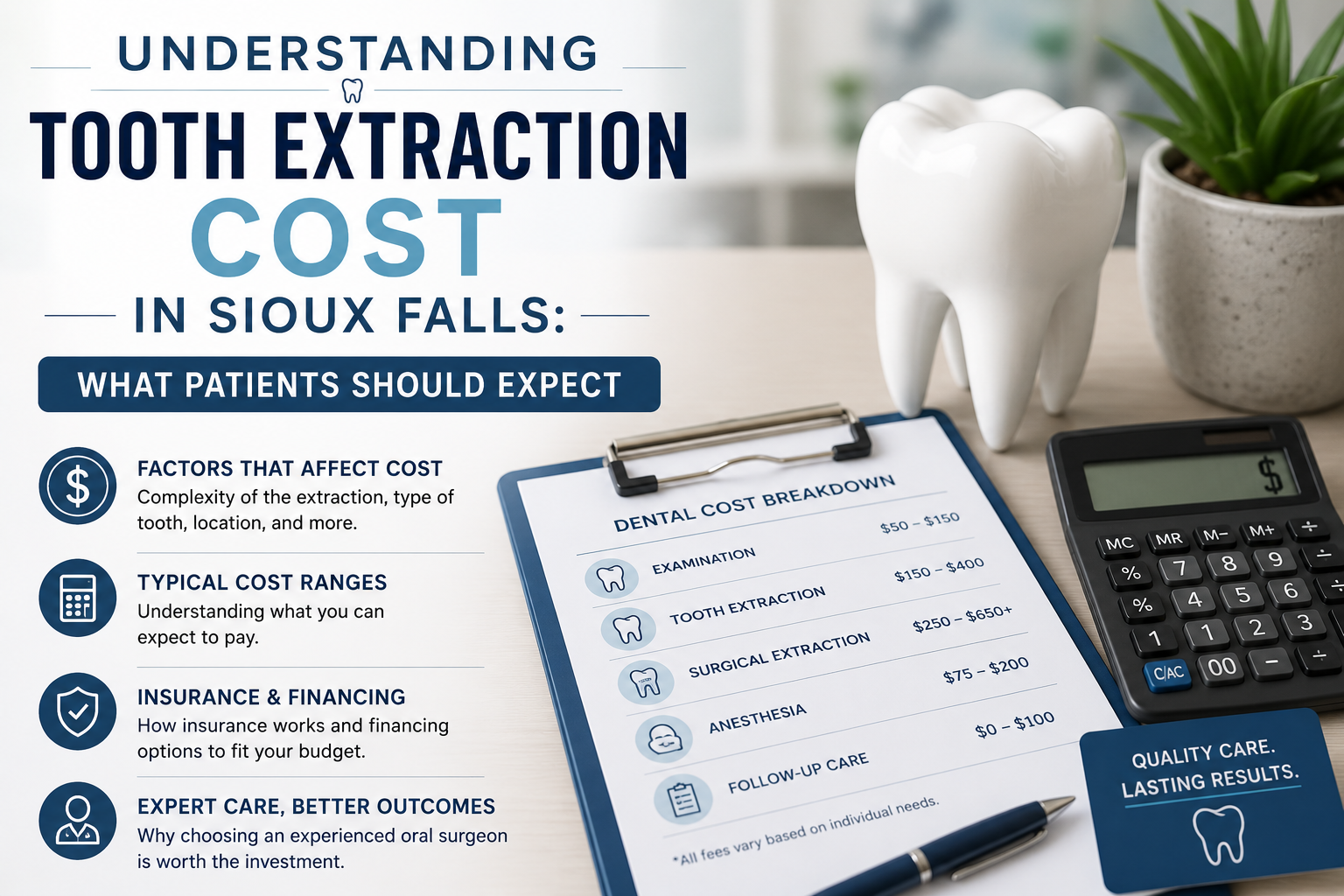
Tooth extraction is a common dental procedure indicated for decay, overcrowding, or impaction. Understanding the costs for tooth extractions in Sioux Falls helps you prepare financially and choose appropriate care. This guide reviews the factors that influence cost, the types of extractions performed, and the effect of insurance on total expenses. We also outline payment and financing options available at Siouxland Oral Surgery, a specialised local practice. By the end, you will have a clearer estimate of expected costs and practical steps to manage them.
What Factors Influence Tooth Extraction Costs in Sioux Falls?
Multiple factors determine extraction cost, including the extraction type, the chosen anesthesia, and additional facility or diagnostic fees. Knowing these elements helps patients anticipate expenses and plan accordingly.
Broader analyses place dental extraction costs in context with other significant dental and surgical procedures to illustrate overall financial impact.
Primary Dental Extraction Cost Analysis
ranged from $4,365 to $5,101, with no single cost or probability being most impactful. This study showed that expected costs of primary dental extraction and RCTx were roughly equal.
Expected costs of primary dental treatments and endoscopic sinus surgery for odontogenic sinusitis, JR Craig, 2022
Types of Extractions
Extractions fall into two categories: simple and surgical. Simple extractions remove teeth that are visible and accessible. Surgical extractions address impacted or partially erupted teeth and require more advanced surgical technique. Costs vary accordingly: a simple extraction may range from $75 to $300, while a surgical extraction typically falls between $225 and $600, depending on case complexity.
Anesthesia Options
Anesthesia choice affects cost. Options include local anaesthesia, sedation, and general anaesthesia. Local anaesthesia is usually included in the base fee. Sedation may add approximately $150 to $500. General anaesthesia can increase costs by $500 or more. Discuss anaesthesia with your oral surgeon to match clinical needs and budget.
Additional Fees
Beyond the extraction and anaesthesia, additional fees may apply for follow-up care, prescribed medications, and imaging or diagnostics. For example, follow-up visits commonly range from $50 to $150, and medications can add $20 to $100. Being aware of these potential charges helps you budget more accurately.
How Does the Type of Extraction Affect Pricing?
The extraction type is a primary cost driver. Simple extractions are less complex and therefore less expensive. Surgical extractions require more time, specialised instruments, and surgical skill, which raises the price. Consult your oral surgeon for an itemised estimate tied to your specific procedure.
What Role Does Insurance Coverage Play in Cost Variation?
Insurance can substantially reduce out-of-pocket costs, but coverage varies by plan. Review your policy for limits, co-pays, and exclusions related to extractions. Understanding your plan helps you estimate your financial responsibility and identify gaps you may need to address.
How Does Oral Surgery Insurance Coverage Work for Tooth Extractions?
Oral surgery coverage typically classifies tooth extractions as medically necessary procedures that may be partially covered. Be aware of policy details such as waiting periods and annual maximums, as these terms directly influence your coverage.
Which Insurance Plans Commonly Cover Oral Surgery Procedures?
Common carriers that cover oral surgery include PPO plans and some HMOs. Confirm coverage specifics with your insurer and verify whether your chosen oral surgeon is in-network to reduce unexpected costs.
How Can Patients Maximize Their Insurance Benefits for Tooth Extraction?
To optimise benefits, review your policy thoroughly, request pre-authorisation when appropriate, and maintain clear records of all insurer communications. Ask your provider about financial assistance programs that may cover costs outside your insurance benefits.
What Payment Options and Financing Are Available for Tooth Extraction?
Patients in Sioux Falls have several payment and financing options to manage costs. Many oral surgery practices, including Siouxland Oral Surgery, offer structured payment plans that spread the cost over time to reduce immediate financial burden.
Are Dental Payment Plans Offered at Siouxland Oral Surgery?
Siouxland Oral Surgery offers payment plans tailored to patient needs. These plans typically feature low monthly payments to aid budgeting. Contact the practice to review eligibility and specific terms. For more information, see the payment options page.
How Can Patients Access Affordable Tooth Extraction Services in Sioux Falls?
Affordable care options include community health programmes, dental schools with reduced-fee clinics, and practice-level payment plans. Some practices may also provide promotional discounts or third‑party financing to assist patients with payment.
What Should Patients Expect During the Tooth Extraction Procedure?
The procedure follows a standard sequence to ensure safety and comfort. It begins with a clinical consultation and assessment. You will receive anaesthesia to control pain. The extraction itself may take a few minutes for simple cases or exceed an hour for complex surgical cases, depending on clinical factors.
What Are the Steps Involved in Wisdom Tooth Removal?
Wisdom tooth removal typically includes an initial evaluation, radiographic imaging to assess tooth position, administration of anaesthesia, and the extraction procedure. Aftercare instructions are provided to support healing and minimise discomfort. Following those instructions closely supports a smooth recovery.
Historical analyses raise questions about the necessity and cost of some third‑molar removals, highlighting the importance of evidence‑based clinical indications.
Wisdom Tooth Extraction Costs & Insurance Overcharges
Many third molars that are developing normally in adolescents are classified as impacted and removed before they erupt, a practice that results in large expenditures for unnecessary surgery. In addition, the difficulty of the extractions is frequently exaggerated, so that patients and insurance plans are overcharged.
Containing the cost of third-molar extractions: a dilemma for health insurance, 1983
How Does Expert Surgical Care Ensure Patient Safety and Comfort?
Specialised surgical care reduces risk and enhances comfort. Oral surgeons are trained to manage complex extractions and use advanced techniques and equipment to limit complications. They offer appropriate anaesthesia choices and provide comprehensive pre‑operative and post‑operative protocols to support safe outcomes.
What Is the Typical Recovery Process After Tooth Extraction?
Recovery usually requires several days of rest and routine wound care. Swelling, mild bleeding, and discomfort are expected. Adhering to your oral surgeon’s aftercare instructions for pain control and oral hygiene is essential for uncomplicated healing.
How Long Does Recovery Usually Take?
Recovery times vary by procedure complexity and patient health. Many patients resume normal activities within a few days. Complete soft‑tissue healing typically occurs within one to two weeks. Contact your oral surgeon if you notice atypical symptoms.
What Aftercare Practices Promote Successful Healing?
To support healing after extraction, follow specific aftercare measures, including:
- Managing Swelling: Applying ice packs to the outside of the cheek can help reduce swelling.
- Dietary Restrictions: Eating soft foods and avoiding hot or spicy items can prevent irritation.
- Oral Hygiene: Maintaining proper oral hygiene is crucial, but patients should avoid vigorous rinsing for the first 24 hours.
Adhering to these measures supports predictable healing and reduces the risk of complications.
How Can Scheduling a Consultation Help Clarify Tooth Extraction Costs?
A consultation with an oral surgeon provides a personalised assessment and a detailed cost estimate. The surgeon will review your dental condition, recommend the appropriate procedure, and outline payment options. For further information, see the resources page.
What Information Is Discussed During a Patient Consultation?
Consultations typically cover your dental history, the specific extraction recommended, an itemised cost estimate, and available payment arrangements. This discussion ensures you have the information needed to make an informed decision.
How Does Consultation Support Transparent Cost Communication?
Consultation promotes transparent cost communication by reviewing all procedure components, potential additional fees, and insurance implications. Clear financial discussion builds trust and helps you plan for treatment confidently.
Frequently Asked Questions
What are the signs that a tooth may need to be extracted?
Signs that a tooth may require extraction include severe decay, persistent or worsening pain, or infection that does not resolve with treatment. Overcrowding and impacted teeth, especially third molars, can also necessitate removal. Seek evaluation from a dental professional to determine the appropriate course of action.
How can I prepare for a tooth extraction appointment?
Prepare by reviewing all medications with your oral surgeon, as some may require adjustment. Arrange transportation home if you will receive sedation or general anaesthesia. Follow any fasting or pre‑operative instructions provided by your surgeon to reduce procedural risk.
What should I do if I experience complications after a tooth extraction?
If you have excessive bleeding, severe pain, fever, or marked swelling after an extraction, contact your oral surgeon promptly. Early assessment allows timely intervention and reduces the likelihood of more serious complications.
Are there any dietary restrictions after a tooth extraction?
Yes. Consume soft foods such as yogurt, applesauce, and mashed potatoes for the first few days. Avoid hot, spicy, or crunchy foods that could irritate the site. Maintain hydration, but avoid using straws, since suction may dislodge the blood clot and delay healing.
How can I manage pain after a tooth extraction?
Pain control typically includes over‑the‑counter analgesics such as ibuprofen or acetaminophen and the application of ice packs to the cheek to reduce swelling. Follow your oral surgeon’s aftercare instructions, rest, and maintain gentle oral hygiene to support recovery.
What are the potential risks associated with tooth extractions?
While extractions are generally safe, risks include infection, dry socket (loss or failure of the blood clot), nerve injury, and excessive bleeding. Discuss these risks with your oral surgeon to understand prevention strategies and signs that warrant follow‑up care.
Conclusion
Understanding tooth extraction costs in Sioux Falls enables informed choices about dental care. Consider extraction type, anaesthesia, and insurance coverage when planning financially. Explore payment plans and financing to increase accessibility to necessary treatment. Schedule a consultation to obtain a personalised estimate and clear next steps for your care.