
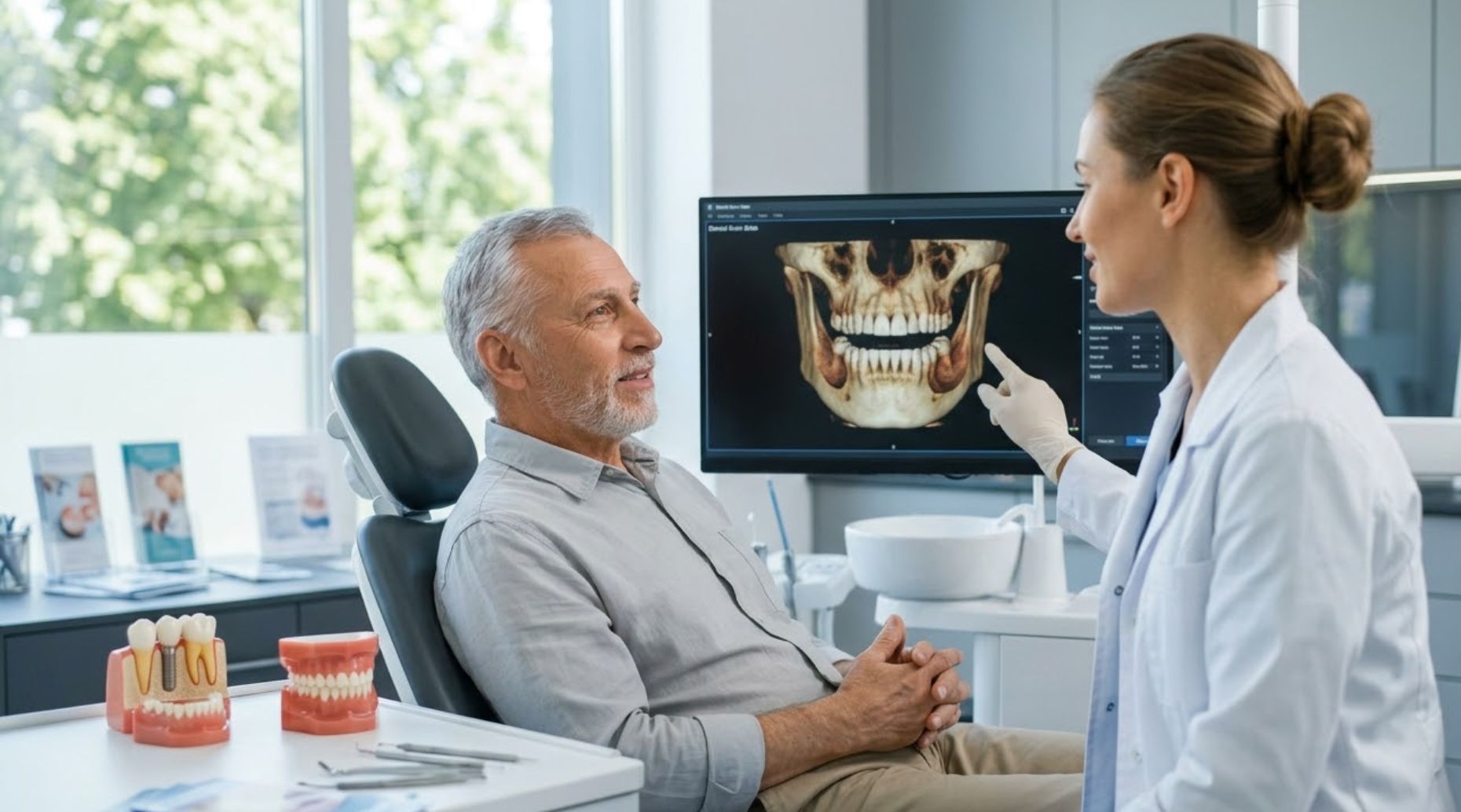
Severe jawbone loss can limit candidacy for dental implants, including All-on-4, which is intended for patients with reduced bone volume. This article reviews how advanced atrophy affects implant eligibility, common causes of bone loss, and the treatment pathways clinicians use. You will learn how bone loss changes All-on-4 planning, when grafting is required, and what alternatives—such as zygomatic implants—are available. Understanding these factors helps patients and clinicians choose the safest, most effective restoration strategy.
What Is Severe Jawbone Loss and How Does It Affect Dental Implant Candidacy?
Severe jawbone loss denotes a marked reduction in mandibular or maxillary bone volume and density from causes such as periodontal disease, tooth loss, or trauma. Adequate bone is required for implant primary stability and predictable osseointegration; without it, implants risk failure and further oral complications. Accurately assessing the extent of resorption is therefore essential to determine which surgical and prosthetic options will be safe and effective.
Understanding the Causes and Impact of Jawbone Atrophy on Implant Stability
Jawbone atrophy commonly follows prolonged tooth loss, chronic periodontal infection, or age-related declines in bone density. When teeth are absent, the alveolar bone no longer receives mechanical stimulation from chewing and begins to resorb. Reduced bone volume lowers the available surface for osseointegration and compromises implant stability. Early diagnosis and timely intervention improve the prospects for successful implant placement.
How Severe Bone Loss Influences Eligibility for All-on-4 Dental Implants
The All-on-4 method is engineered to make efficient use of remaining bone by angling posterior fixtures and placing four implants to support a full arch. This approach often reduces the need for extensive grafting and can render implant restoration feasible for patients who lack conventional bone volume. Careful surgical planning determines whether All-on-4 is appropriate or whether adjunctive procedures are required to ensure long-term success.
Siouxland Oral Surgery offers advanced surgical management for full-arch restorations and implant therapy, tailoring treatment plans to the degree of jawbone loss each patient presents.
What Are the Bone Grafting Procedures Required for All-on-4 Implants?
Bone grafting is frequently performed when native bone volume is insufficient to support implants. Grafting augments the alveolar ridge by introducing autogenous, allogenic, or xenogenic material that promotes new bone formation and establishes a stable foundation for implants. Selecting the appropriate grafting technique depends on the anatomic deficit, treatment timeline, and the patient’s overall health.
Types of Bone Grafting Techniques to Restore Jawbone Density
Several bone grafting techniques can be utilized to restore jawbone density, including:
- Autografts: Bone is harvested from the patient’s own body, typically from the hip or chin, ensuring compatibility and reducing rejection risk.
- Allografts: Donor bone from a cadaver is used, which is processed and sterilized to ensure safety.
- Xenografts: Bone material from another species, such as bovine, is used to stimulate bone growth in the patient.
Each technique has its indications and expected outcomes, and the choice of method will depend on the individual patient’s condition and treatment goals.
Expected Timelines and Success Rates for Bone Grafting Before Implant Placement
Healing after grafting typically requires four to six months before implants can be placed. When performed by experienced surgeons, grafting success rates exceed 90% in many studies. Outcomes depend on patient health, the severity of bone loss, and adherence to post-operative care. Realistic timelines help patients plan their restoration journey and set appropriate expectations.
Are Zygomatic Implants a Viable Alternative for Severe Jawbone Loss?
Zygomatic implants provide an alternative for patients with extreme maxillary resorption who are not candidates for conventional implants. These longer fixtures engage the zygomatic bone (cheekbone) rather than the maxilla, permitting stable anchorage in cases of severe upper-jaw atrophy. For appropriately selected patients, zygomatic implants can restore function and support prosthetics when other options are limited.
Ongoing research is evaluating patient-specific and advanced solutions for managing severe maxillary atrophy, which may supplement or replace traditional approaches such as zygomatic implants in select cases.
Patient-Specific Implants for Severe Maxillary Atrophy
This report presents the first follow-up of patients who received patient-specific implants for severe atrophic maxillae at Hannover Medical School.
Managing the severely atrophic maxilla: Farewell to zygomatic implants and extensive augmentations?, 2022
How Zygomatic Implants Bypass Traditional Bone Requirements
Zygomatic implants bypass the need for substantial maxillary bone by anchoring in the denser zygomatic bone. This technique often eliminates or reduces the need for extensive grafting, shortens overall treatment time, and can allow provisional prosthetics on the same day as surgery in many cases. Careful case selection and surgical expertise are essential to achieve predictable results.
Patient Candidacy Criteria and Surgical Considerations for Zygomatic Implants
Candidacy for zygomatic implants requires adequate zygomatic bone quality, suitable maxillary anatomy, and general health compatible with major oral surgery. Preoperative 3D imaging and detailed surgical planning are mandatory to map implant trajectories and avoid vital structures. Thorough evaluation ensures the procedure is both safe and appropriate for each patient.
What Are the Full Arch Restoration Requirements for Patients with Bone Loss?
Full-arch restoration in the setting of bone loss demands systematic assessment and multidisciplinary planning to achieve durable outcomes. Clinicians evaluate bone quantity and quality, medical comorbidities that affect healing, and patient expectations to develop a tailored plan that prioritizes safety and long-term function.
- Bone Density Assessment: Comprehensive imaging to evaluate the extent of bone loss and determine the best approach for restoration.
- Health Evaluation: Assessing the patient’s overall health and any underlying conditions that may affect healing and implant success.
- Consultation Requirements: Detailed discussions with the surgical team to outline treatment options, expectations, and potential risks.
These requirements are essential for developing a comprehensive treatment plan tailored to the individual needs of each patient.
Comprehensive Treatment Planning for All-on-4 and Alternative Implants
Effective planning for All-on-4 dental implants and alternative options begins with a full clinical exam and high-resolution imaging to characterise anatomy and residual bone. From there, the team defines a customised surgical and prosthetic plan that aligns with the patient’s anatomy and goals. Collaborative care—often involving oral surgeons and prosthodontists—ensures both surgical precision and prosthetic function.
- Diagnostic Imaging: Utilizing 3D imaging to visualize bone structure and plan implant placement accurately.
- Customized Solutions: Developing a tailored approach that considers the patient’s unique anatomy and treatment goals.
- Multidisciplinary Collaboration: Engaging a team of specialists, including oral surgeons and prosthodontists, to ensure comprehensive care.
This collaborative approach enhances the likelihood of successful outcomes and patient satisfaction.
Safety, Comfort, and Long-Term Outcomes of Full Arch Dental Implants
Full-arch implants have a strong safety profile and deliver durable functional and aesthetic benefits when placed and maintained correctly. Compared with removable dentures, implants offer improved masticatory efficiency, prosthetic stability, and patient comfort. Long-term follow-up studies report significant gains in quality of life for most patients who receive properly planned full-arch restorations.
What Do Patient Testimonials Reveal About All-on-4 Implants with Severe Bone Loss?
Patient testimonials frequently report life-changing improvements after All-on-4 treatment, including easier eating, clearer speech, and restored confidence when smiling. Common themes include enhanced daily function, natural appearance of the prosthetic teeth, and satisfaction with the treatment process. These firsthand accounts complement clinical outcomes and help future patients set realistic expectations.
Success Stories Highlighting Bone Grafting and Implant Procedures
Many success stories document patients who regained comfortable chewing and speech after grafting and implant therapy. These narratives illustrate how personalised surgical planning and diligent post-operative care can convert severe bone loss into a predictable restorative outcome. Patients often report relief and renewed quality of life after completing treatment.
Patient Experiences with Recovery and Functional Outcomes
Recovery after grafting and implant surgery varies by procedure complexity, but most patients experience progressive improvement over days to weeks. Initial discomfort is typically managed with prescribed medications and activity modification. As healing advances, patients report increased comfort and function, frequently returning to normal activities within a short period when following postoperative guidance.
Frequently Asked Questions
What is the difference between All-on-4 implants and traditional dental implants?
All-on-4 uses four strategically placed implants to support an entire dental arch, making it suitable for patients with limited bone volume. Traditional implant therapy commonly places one implant per missing tooth and therefore requires more bone. The All-on-4 approach often shortens treatment time and reduces the need for extensive grafting in appropriate cases.
How can I prepare for a consultation regarding All-on-4 implants?
Prepare by bringing your medical and dental history, any recent imaging, and a list of questions about the procedure, recovery, and costs. Clear communication about your expectations and health status helps the surgical team assess candidacy and develop a personalised plan during the consultation.
What are the potential complications of zygomatic implants?
Zygomatic implant surgery carries risks similar to other major oral surgeries, including infection, implant failure, and potential injury to adjacent structures such as the sinus or nerves. Because the procedure is more complex, it requires advanced imaging and experienced surgical teams to minimise these risks. Discussing potential complications and mitigation strategies with your surgeon is essential.
How do I know if I am a candidate for zygomatic implants?
A comprehensive evaluation with 3D imaging determines candidacy by assessing zygomatic bone quality, maxillary anatomy, and overall medical fitness for surgery. If the maxilla is severely resorbed but the zygomatic bone is sufficient, zygomatic implants may be a suitable option. A detailed consultation will clarify your individual suitability.
What is the cost difference between All-on-4 implants and zygomatic implants?
All-on-4 full-arch treatment commonly ranges from $20,000 to $30,000, while zygomatic implant procedures are often more costly—frequently exceeding $30,000—because of their complexity. Final cost depends on surgeon expertise, materials, and any adjunctive procedures such as bone grafting. Discuss financing and insurance during your consultation to understand the total investment.
What post-operative care is required after receiving All-on-4 implants?
Post-operative care includes following your surgeon’s instructions for medications, wound care, and oral hygiene, attending scheduled follow-ups, and adhering to a soft diet initially to protect the implants. Regular maintenance of the prosthesis and monitoring for signs of infection or complications are critical to long-term success.
Conclusion
Assessing severe jawbone loss is a necessary step to select the safest, most effective restoration path. All-on-4 and alternatives such as zygomatic implants can provide reliable options for patients with significant resorption, restoring function and quality of life when matched to the patient’s anatomy and health. Consult with an experienced surgical team to review imaging, discuss tailored options, and book an appointment at Siouxland Oral & Maxillofacial Surgery to begin a treatment plan that prioritizes safety, comfort, and durable outcomes.